


Evaluation in Times of Uncertainty - AI and Professionalization in Georgia
Painel | Hybrid
-
Organized by:
The University of Georgia (UG)
- In partnership with: Monitoring, Evaluation and Learning Professionals Association (MELPA)
About the Event
HubEVAL at the Public Administration Department at the University of Georgia & Monitoring, Evaluation and Learning Professionals Association (MELPA) are hosting a joint event as part of GLocal 2026. The main objective of the event is to discuss practices, challenges, and lessons learnt for evaluation in times of AI. Additionally, the event will bring together an overarching discussion related to the professionalization of evaluation in Georgia.
Sessões
Painel
|
Hybrid
June 3, 2026
11:00 AM - 13:00 PM
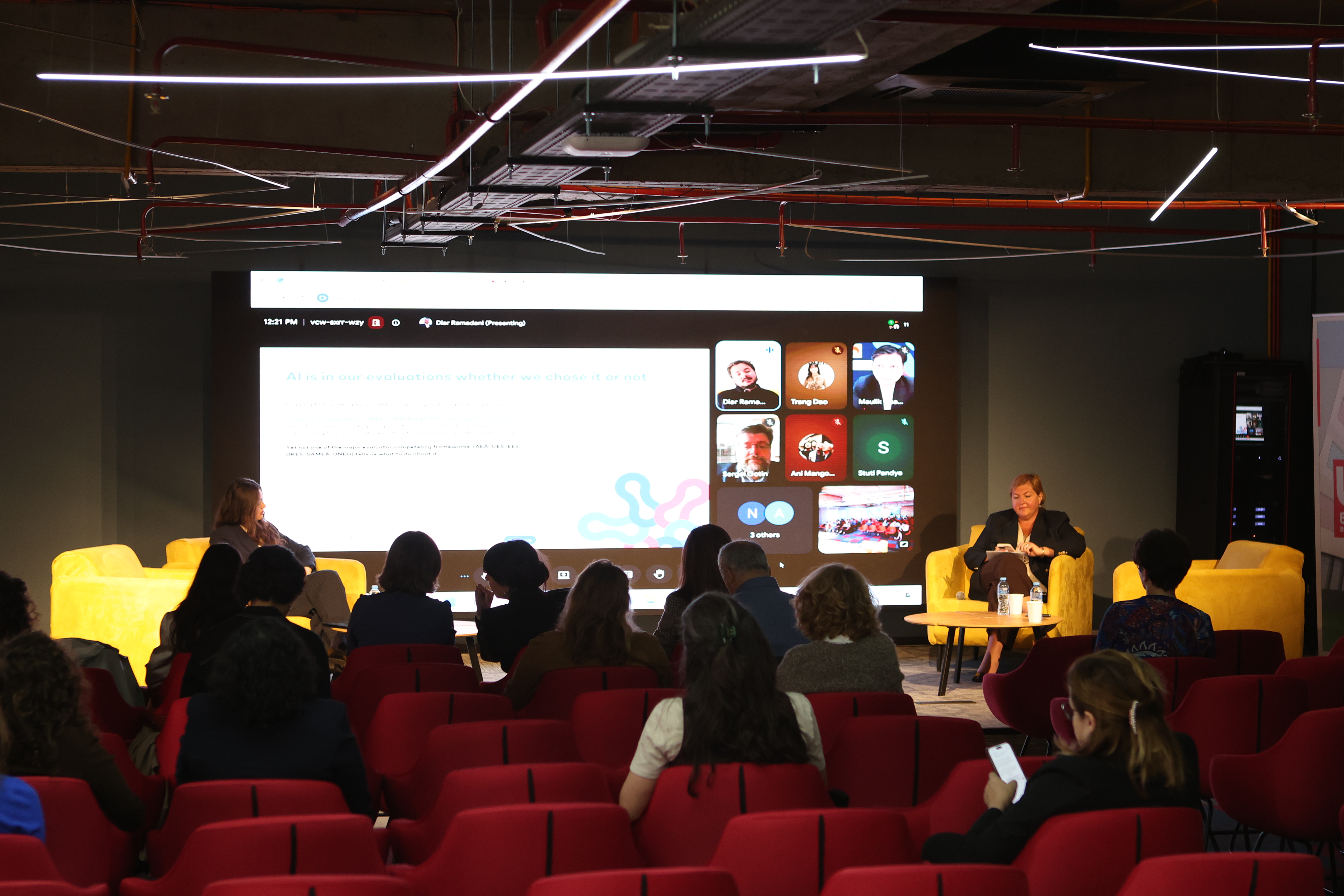
Five practitioners from different parts of the world bring concrete experience of AI in evaluation to the table. Two cases examine what AI actually does to evidence quality: one focused on qualitative work, what tools are being used, what they change, and what they risk, and one focused on quantitative analysis, asking the same hard questions from a different methodological angle. A third case zooms out, looking at how evaluators are navigating a landscape of multiple AI tools across a single evaluation and what it takes to make those decisions well. The fourth brings it closer to home, drawing on emerging AI practices in evaluation in Georgia and what the local experience reveals about a global shift.
Taken together, the cases surface something important: AI does not arrive the same way in every evaluation. It lands differently depending on method, context, and what the evidence is ultimately for.
From that grounded base, the session closes with a broader frame. Drawing on original research across six major global evaluator competency frameworks, it asks what the cases make unavoidable, when AI is shaping how evidence is generated and interpreted, what must remain irreducibly human?
University of Georgia (UG) 77a M. Kostava Street, Tbilisi 0171, Georgia Room 519
Speakers
| Nome | Título | Biography |
|---|---|---|
| Nini Bokuchava | AI Engineer at Methodo & BSc candidate in Data Science, AI and Intelligent Systems at Utrecht University | Nini Bokuchava is pursuing a BSc degree in Data Science, AI and Intelligent Systems at Utrecht University and works as an AI Engineer at Methodo. Her work focuses on developing AI-powered research tools in the fields of market research and organizational development. She combines a strong international academic background in computer science and physics from the United States and the United Kingdom with practical experience in AI product development. |
| Sergei Gotin | Sergei Gotin, Founder & Managing Partner, IMACON Consulting Group (Poland) | Sergei Gotin is the Founder and Managing Partner of IMACON Consulting Group (Poland) and a senior evaluation expert with over 25 years of international experience, including more than 15 years in monitoring and evaluation. He has led 60+ external evaluations across Eastern Europe, the South Caucasus and Central Asia — both for UN agencies (OIOS, UNDP, UNICEF, UNFPA, UNIDO) and for projects funded by the EU, USAID, BMZ, Sida and other donors. His work spans theory-based and mixed-method evaluation, organizational capacity assessment, and capacity building in PCM/LFA and RBM. With an earlier background as an IT engineer and software development team leader, he focuses today on the responsible integration of digital and AI tools into evaluation practice, with a strong human-in-the-loop discipline. He is a member of the Polish Evaluation Society. |
| Maulik Chauhan | Founder and Director, Trestle Research and Consulting | Maulik Chauhan is a development sector professional, and data systems specialist with over 15 years of experience in M&E, research, and digital transformation. He is the founder of Trestle Research and Consulting, and the India lead (consultant) for SurveyCTO. Maulik has worked with organizations like the United Nations and J-PAL South Asia, focusing on digital data collection, real-time monitoring, analytics, and AI-enabled approaches to strengthen evaluation and evidence-based decision-making. He is based out of India. |
| Andrea Adler | Independent Public Health, Nutrition & Evaluation Consultant; MSc candidate, Wageningen University & Research | Independent evaluation and MEAL consultant with more than 15 years of experience in international development cooperation across Africa, Asia and Europe. She specializes in mixed-methods evaluations, qualitative research, learning-oriented approaches and the evaluation of complex programmes for NGOs and international organizations. Her recent work includes evaluations and advisory assignments related to gender, public health, food systems, conflict sensitivity and organizational learning, with a growing focus on the opportunities and risks of using AI in evaluation practice. Andrea is particularly interested in questions of bias, transparency and reflexivity in AI-supported qualitative analysis. In addition to her consulting work, she teaches qualitative tools and self-employment for evaluators with GNE (Gesellschaft für nachhaltige Entwicklung) and is currently pursuing an MSc in Nutritional Epidemiology and Public Health at Wageningen University & Research (WUR), Netherlands. |
| Diar Ramadani | MA candidate in Evaluation, Saarland University | Diar Ramadani is an evaluator and data scientist with more than 10 years of experience in the field of MEL strategy development, research, grantmaking, AI, data & analytics integration & knowledge management. He holds a Master of Arts in Evaluation from Saarland University, and a Bachelor’s in Public Policy and Management from RIT New York. |
Moderators
| Nome | Título | Biography |
|---|---|---|
| Maia Guntsadze | Co-founder of MELPA and Managing Director at Credence Consulting | Maia Guntsadze is a co-founder of MELPA and Managing Director at Credence Consulting. She has 20 years of experience managing teams in the public and private sectors as well as donor organizations. She holds a PhD in Economics and MA degree in Public Administration. Maia is also an assistant professor at ALTE University, where she lectures on project and strategic management. |
Painel
|
Hybrid
June 3, 2026
14:00 PM - 16:00 PM
If the morning asks what AI is doing to evaluation, the afternoon asks what evaluators and the academia around them, must do for the profession.
Building a recognisable evaluation profession in a country where institutional landscapes shift quickly, where monitoring is too often mistaken for evaluation, and where the field rarely appears in academic curricula and then only as a fragment within other subjects, raises questions that extend well beyond credentials. This panel takes Georgia as both starting point and case.
Drawing on the University of Georgia's leading academic approach to evaluation, MELPA's voice as the country's professional association, and HubEVAL's work as the first university-anchored evaluation hub for Eastern Europe and the South Caucasus, the panel examines how associations, university curricula, and donor practice together shape or fail to shape evaluation as a recognised profession. The discussion is enriched by perspectives from established evaluation associations and academic experiences in Europe and beyond, asking what evaluation quality, ethics, and critical evaluation literacy mean as components of democratic infrastructure and where the next decade of professionalization in Georgia needs to go.
University of Georgia (UG), 77a M. Kostava Street, Tbilisi 0171, Georgia, Room 519
Speakers
| Nome | Título | Biography |
|---|---|---|
| Dr. Anis Ben Brik | Associate Professor at the College of Public Policy at Hamad Bin Khalifa University, Qatar | |
| Ana Kvintradze-Hardy | ჩo-founder & Executive Director of MELPA, Georgia’s Monitoring, Evaluation and Learning Professionals Association | Ana Kvintradze-Hardy is a co-founder & Executive Director of MELPA, Georgia’s Monitoring, Evaluation and Learning Professionals Association. She has more than 15 years of experience in evaluation research across the South Caucasus, Eastern Europe, and Middle East. Ana is currently working on her PhD thesis on institutionalization of evaluation in the public sector. |
| Dea Tsartsidze | HubEVAL, Public Administration Department at the University of Georgia & Partner at Solution Alternatives International (SAI) | Dea Tsartsidze is a faculty member at the University of Georgia's Public Administration Department and founding member of HubEVAL - the first university-anchored evaluation hub for Eastern Europe and the South Caucasus and Partner at Solution Alternatives International (SAI). With 15+ years of experience across 100+ countries, she has worked with UN agencies, USAID, the EU, FCDO, and other major development organisations on some of the field's hardest evaluation questions - from governance reform and democratic accountability to evaluating in challenging political environments. A finalist for the Molly Hageboeck Award for Excellence in MEL, she is dedicated to professionalising evaluation practice through academic curricula and building the next generation of evaluators in Georgia and the region. |
| Gvantsa Beselia | Ethics, Integrity and Public Administration Expert; Former Head of Human Capital Development, Civil Service Bureau of Georgia | Public Administration expert, academic, and integrity management consultant with over 12 years of experience in institutional change and civil service reform in Georgia. She holds a Doctorate in Law (Dr. Jur.) from the German University of Administrative Sciences Speyer and brings a deeply practical perspective to governance and public sector development. As former Head of Human Capital Development at the Civil Service Bureau of Georgia, she led national HR strategies and designed civil service modernisation policies aligned with international SIGMA principles. Her expertise spans strategic human resource management, integrity and ethics management, public sector reform, and capacity building. She has authored key national handbooks and guidelines on conflict-of-interest prevention and ethical conduct in public institutions. |
| Ani Mangoshvili | Research Analyst, University of Georgia; OGP Youth Fellow; Lecturer; MPA Candidate at the University of Georgia | Dedicated research and public policy professional with a strong focus on monitoring and evaluation. Currently serving as a Research Analyst and Lecturer at the University of Georgia, she actively engages with key local and international evaluation networks, including IDEAS and EvalforEarth. As a member of HubEVAL - the first evaluation hub in Eastern Europe - she is deeply involved in advancing professionalization of evaluation across the Caucasus region. Her expertise is further shaped by strategic engagements with international institutions such as OGP, the EU, USAID and UNDP, among others. She combines a strong academic background in public administration from Georgia and Italy with extensive practical experience in mixed-method research and policy analysis. |
Moderators
| Nome | Título | Biography |
|---|---|---|
| Nodar Kherkheulidze | HubEVAL, Public Administration Department at the University of Georgia; Senior Regional Monitoring and Evaluation Adviser at GIZ Georgia | Nodar Kherkheulidze leads the Public Administration Program at the University of Georgia and is co-founder of HubEVAL. He also serves as Senior Regional Senior Monitoring and Evaluation Adviser - Strengthening the rights, resources and representation of marginalized, displaced, and conflict-aIected women in Armenia and Azerbaijan - WoW, Deutsche Gesellschaft für Internationale Zusammenarbeit (GIZ) GmbH. With over 20 years of experience spanning Georgian civil service, academia, and international development, and an MPA from Eastern Washington University, he bridges scholarly research with field practice. Nodar was shortlisted for the Molly Hageboeck Award for MEL Innovation for developing evaluation methodology for governance action plans. He has servs as an Open Government Partnership Independent Reporting Mechanism researcher since 2019, assessing national action plans including Georgia's, Ukraine's and Taiwan's Open Parliament Action Plans. His applied research focuses on policy analysis, evaluation methodologies, and evidence-based governance reforms. |
Resumo
The first panel established that AI is already reshaping how evaluation evidence is produced and interpreted, though implications differ by method, context and purpose; participants agreed core evaluative judgment, ethics and interpretation must remain human as frameworks evolve.
The second panel used Georgia as a case to show that professionalization depends on associations, university curricula and donor practice, and that gaps persist: monitoring is often mistaken for evaluation, and evaluation rarely enters academic programs through evaluation professionals, instead arriving via government guidelines rather than the other way around. In both sessions, evaluation quality and ethics were framed as democratic infrastructure, not technical add-ons.
HubEVAL and MELPA will advocate for a broader conversation on responsible use in evaluation, building on the comparative review of global competency frameworks presented and working toward shared regional guidance. HubEVAL will anchor the next phase of this work as the regional home where dispersed efforts come together, convening academics and practitioners alike. On professionalization, the work continues collaboratively through the MELPA working group co-led with the University of Georgia, and through HubEVAL's three pillars (LEARN, RESEARCH/EVIDENCE, CONNECT), including the dedicated M&E course already running at UG. Follow-up convenings and continued knowledge-sharing are planned to sustain the dialogue.
Image Gallery
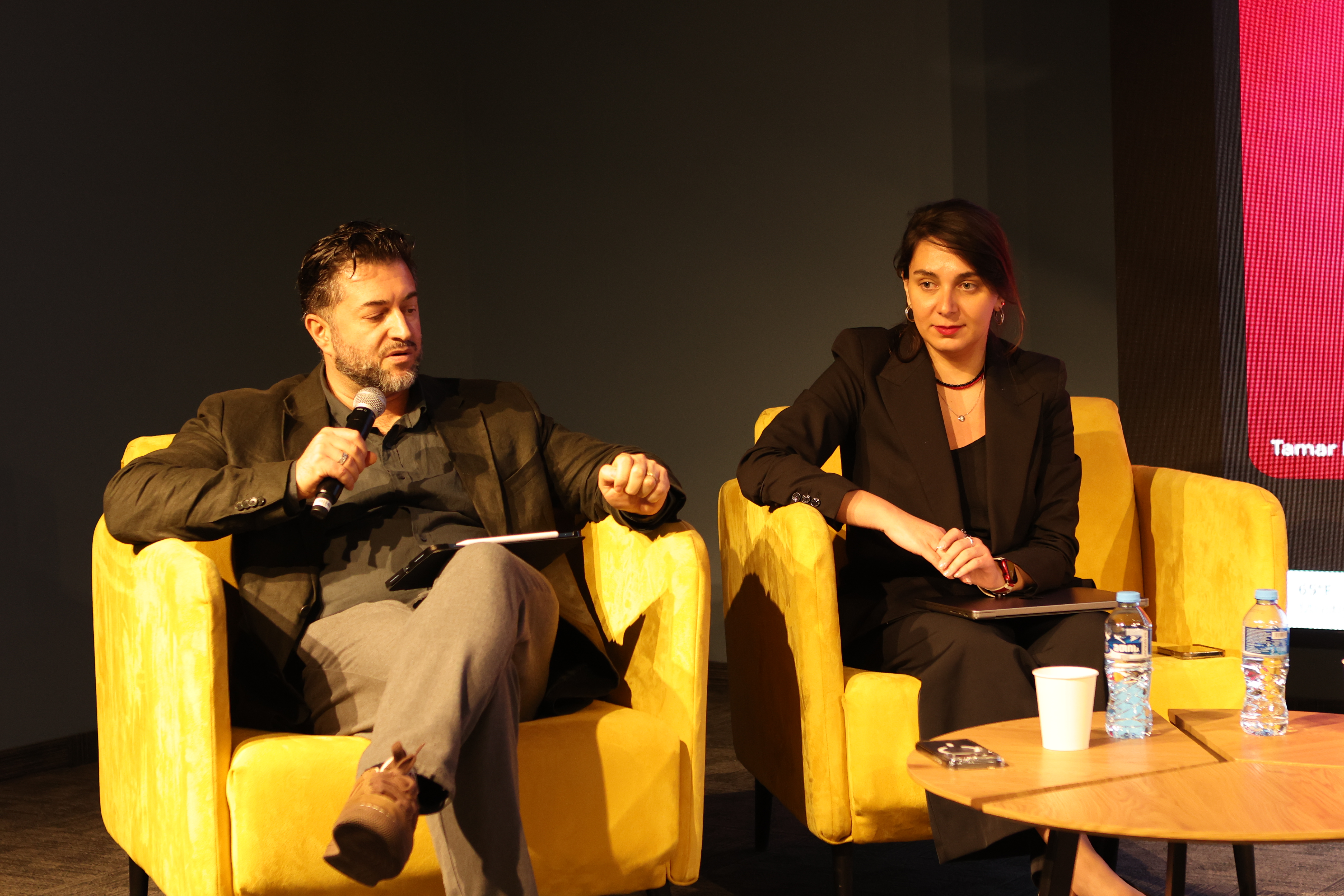
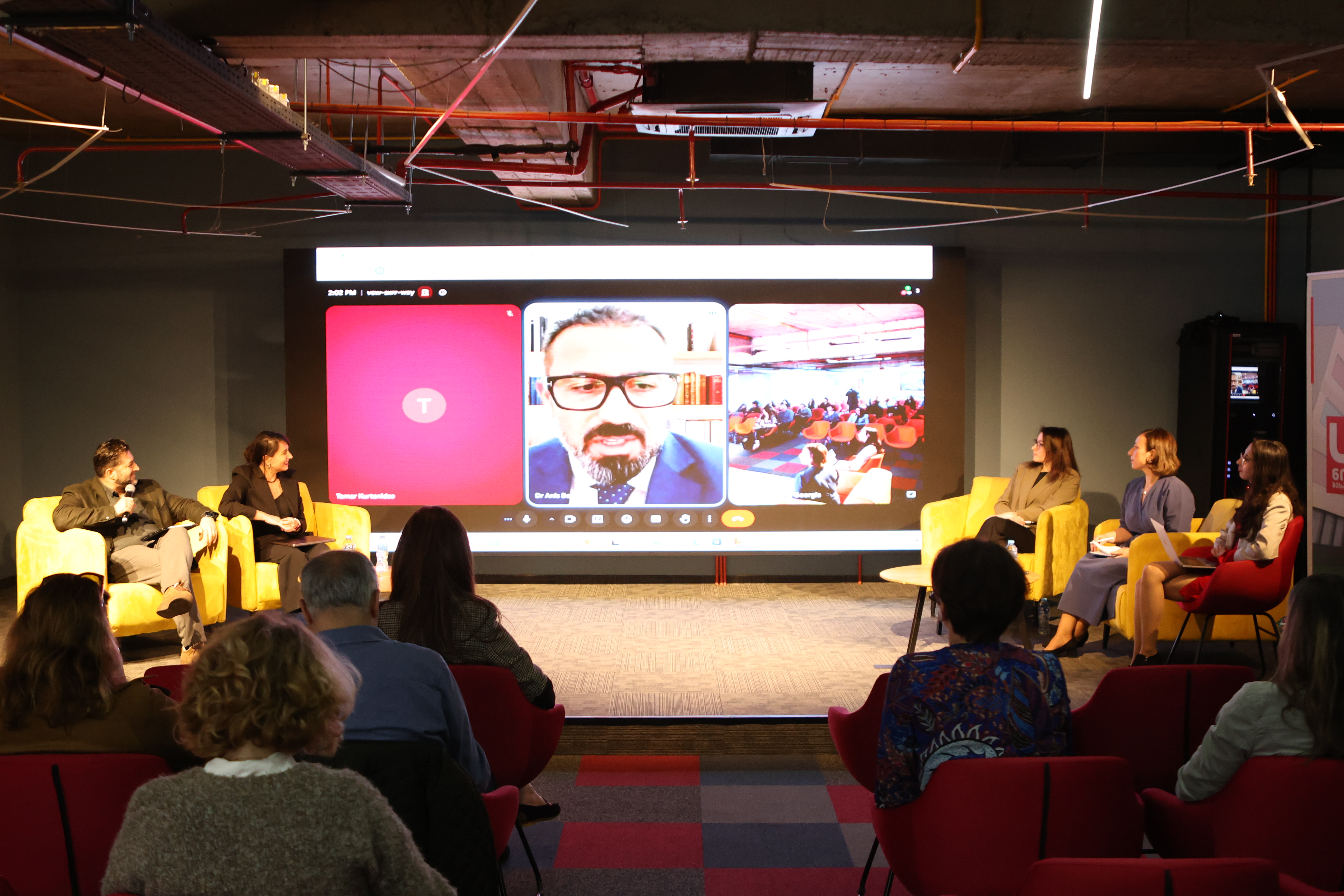
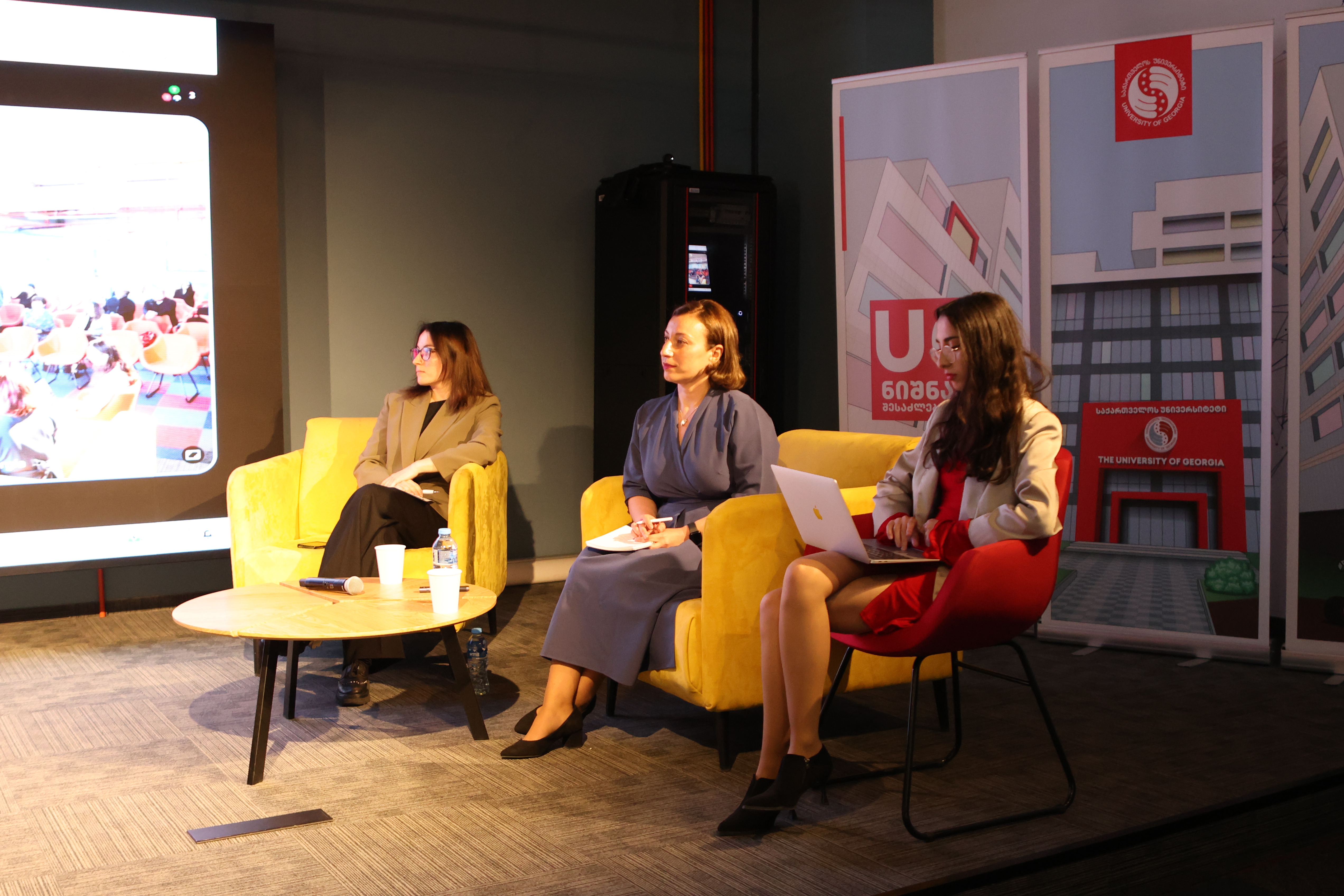
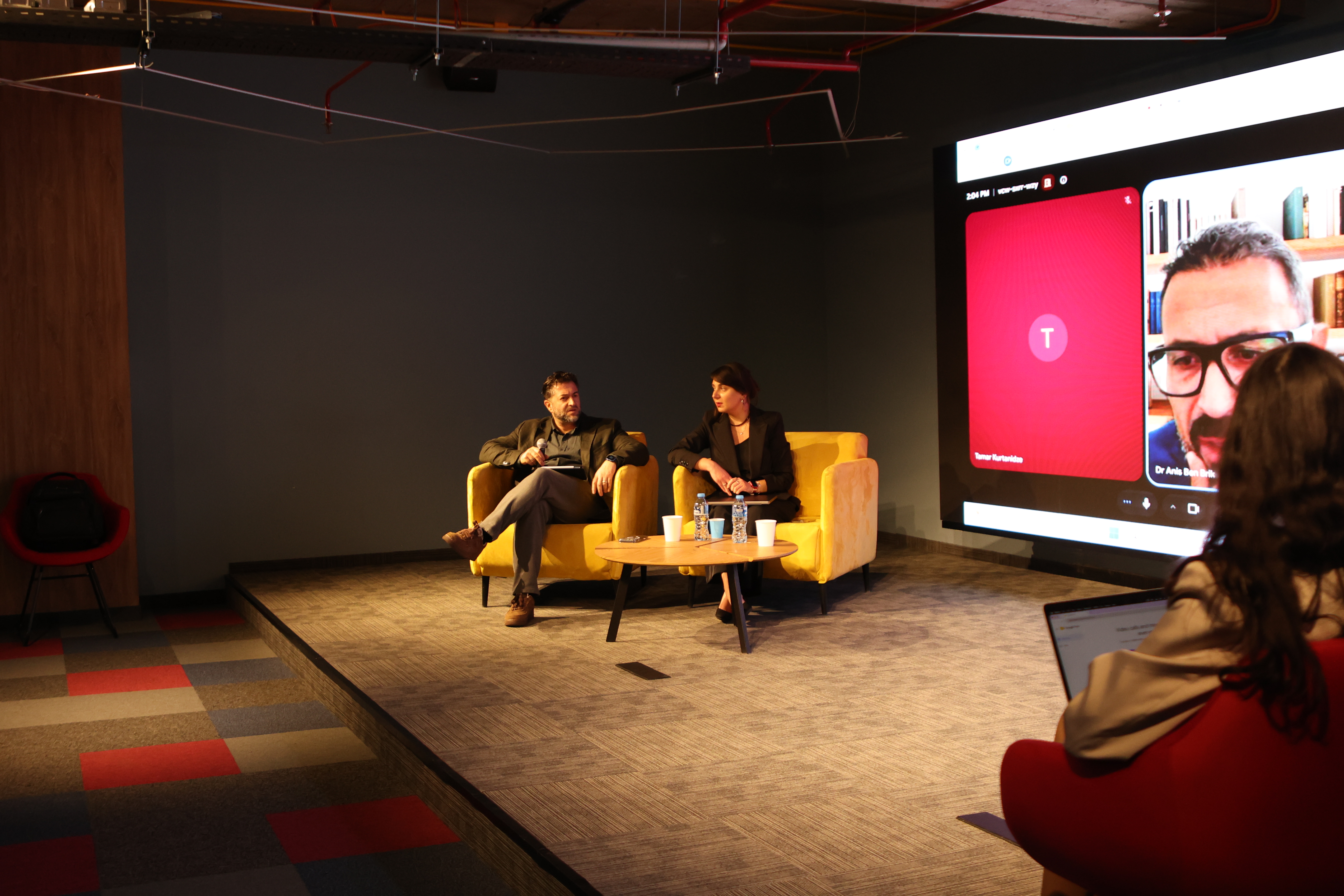
Documents
- HubEVAL and Evaluation Professionalization: how do we teach evaluation in Georgia and Armenia for public administration?
- Professionalization of Evaluation in Georgia’s Higher Education System, and Youth Challenges_Ani Mangoshvili HubEVAL
- AI in Research Opportunities, Challenges & Lessons Learned_Nino Bokuchava
- AI AND EVALUATION: FROM PRACTICE TO PROVOCATION_Maulik Chauhan
- AI in Qualitative Evaluation Efficiency, Bias & Human Responsibility_Andrea Adler
- Safeguarding the Knowledge Generating Function of Evaluation: Evaluator Competencies in the age of AI_Diar Ramadani