From the Sundarbans to the World: Evaluating Climate Change on the Ground
Painel | Online
-
Organized by:
Terre des hommes Foundation
About the Event
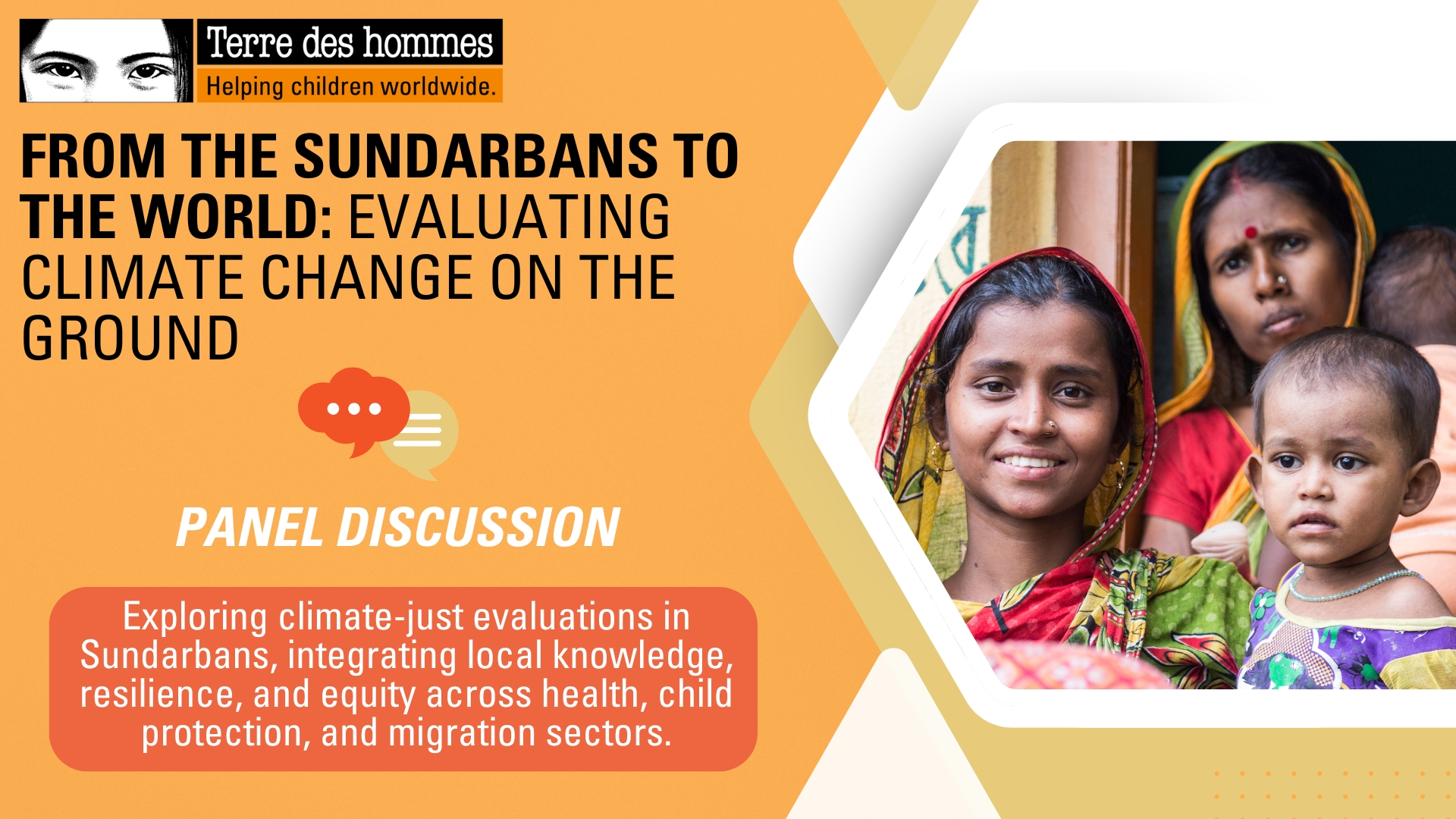
The panel explores how evaluations can be designed and implemented through a climate lens, particularly within climate-vulnerable contexts like the Sundarbans in India. Drawing on multi-disciplinary findings from Terre des hommes' evaluations in health, child protection, and migration in the region, it highlights lessons and best practices for climate-just, equity-focused evaluations that centre local knowledge and resilience- offering insights not only into what we evaluate, but how and for whom we evaluate in the era of climate crisis.
Speakers
| Nome | Título | Biography |
|---|---|---|
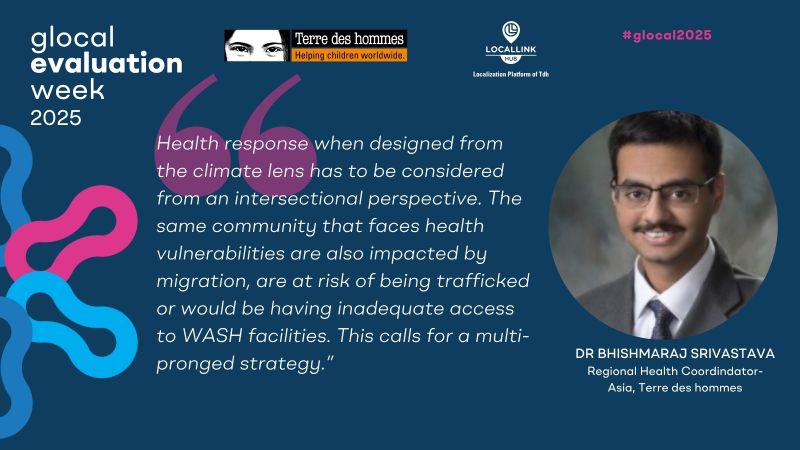
| Dr Bhishmaraj Srivastava | Regional Health Coordinator- Asia, Terre des Hommes | Dr Bhishmaraj Srivastava leads Tdh's health portfolio in Asia. A doctor by profession, he holds a dual degree in public health and business administration from Johns Hopkins University and brings extensive expertise in strategic healthcare and digital innovation in complex humanitarian settings. |
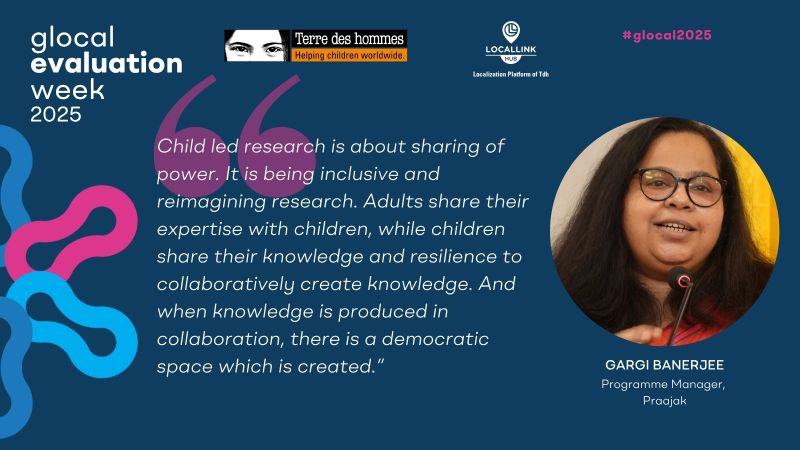
| Gargi Banerjee | Programme Manager- Praajak | Gargi is a social worker, practitioner and researcher working for over two decades at the intersections of gender and child rights and with the child protection systems. She has been part of designing different curriculum on child rights for various stakeholders of the child protection system. |
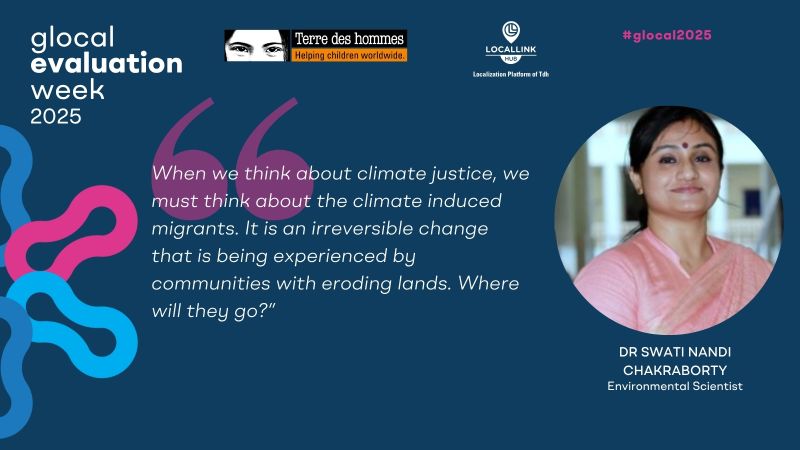
| Dr Swati Nandi Chakraborty | HOD, Life Science at Guru Nanak Institute of Pharmaceutical Science & Technology | Dr Chakraborty is an environmental biotechnological researcher who has extensively led research on heavy metal toxicity, eco-toxicology, plant stress from pollutants, and microbial solutions. She is deeply passionate about sustainable ecosystems, stress-resilient crops, and environmental health. |
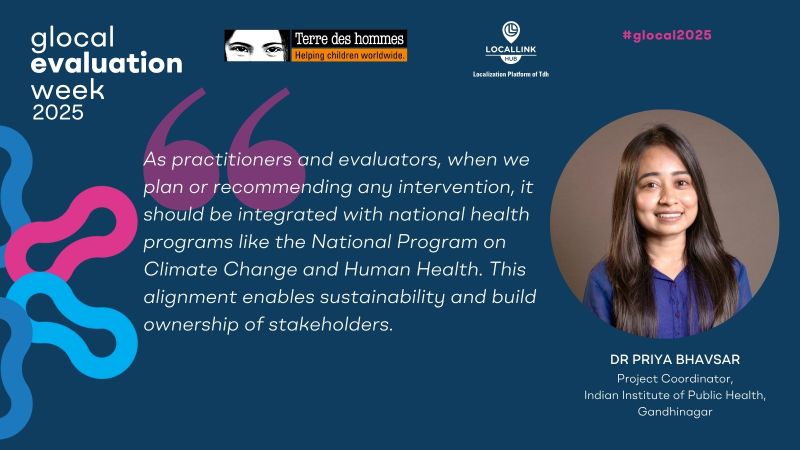
| Dr Priya Bhavsar | Project Coordinator at COHERD, IIPHG | Dr. Priya Bhavsar currently serves as a Project Coordinator at COHERD, IIPHG. Her educational background includes a Master’s in Public Health (MPH) from IIPHG and a Bachelor's in Physiotherapy(BPT) from CHARUSAT University. Over the past seven years, Dr. Bhavsar has actively contributed to various research projects at IIPHG. Her work areas include Climate change, One Health, WASH (Water, Sanitation, and Hygiene), tuberculosis, grant management, and Environmental Health. Her involvement extends beyond theoretical work; she has participated in tool development, training provision, content creation, data analysis, report writing, manuscript preparation, and case study development. She received Dr Indrayan's Award for Biostatistics during her MPH studies. She also received the Argelander Scholarship from the University of Bonn, Germany, in 2023. She has published 25 peer-reviewed national/international journal articles with an h-index of 7. |
Moderators
| Nome | Título | Biography |
|---|---|---|
| Anindit Roy Chowdhury | Country Director- India, Terre Des Hommes | Anindit Roy Chowdhury is a results-oriented development sector and humanitarian leader with 25 years of experience with Save the Children, UN Women, IPPF, Laudes Foundation, and IOM in driving measurable impact through strategic programme management, policy advocacy and resource mobilisation. Anindit currently leads the India delegation at Terre des hommes and passionately advocates for integrating child centricity and localisation in the sector. |
Resumo
The webinar examined the multifaceted impacts of climate change on the Sundarbans leading to rising sea levels, increased cyclonic storms, and freshwater salinity, which act as threat multipliers, exacerbating existing socioeconomic vulnerabilities faced by the community. The panel discussion focused on specific challenges in migration, maternal and child health, and child protection. Panellists emphasised on the need for holistic, adaptive, and community-led approaches to address the human rights ramification from a climate lens, stressing the importance of incorporating local voices, especially those of children and women, into evaluation frameworks.
Evaluations must go beyond clinical outcomes to capture resilience, service accessibility during climate shocks, and community adaptability. Including child-led and participatory methods ensures lived experiences shape success metrics. Integrating qualitative and quantitative data helps unpack causes of service disruptions. Big data and AI improve forecasting and trend analysis, while interdisciplinary approaches explore issues like salinity-driven displacement or child labour in mangrove zones. Mental health impacts, such as climate anxiety, must be included. Technologies like drones also enhance real-time monitoring, enabling informed, inclusive, and future-ready evaluations.
Image Gallery