


What really makes an evaluation "country-led'?
Roundtable | En ligne
À propos de l'événement
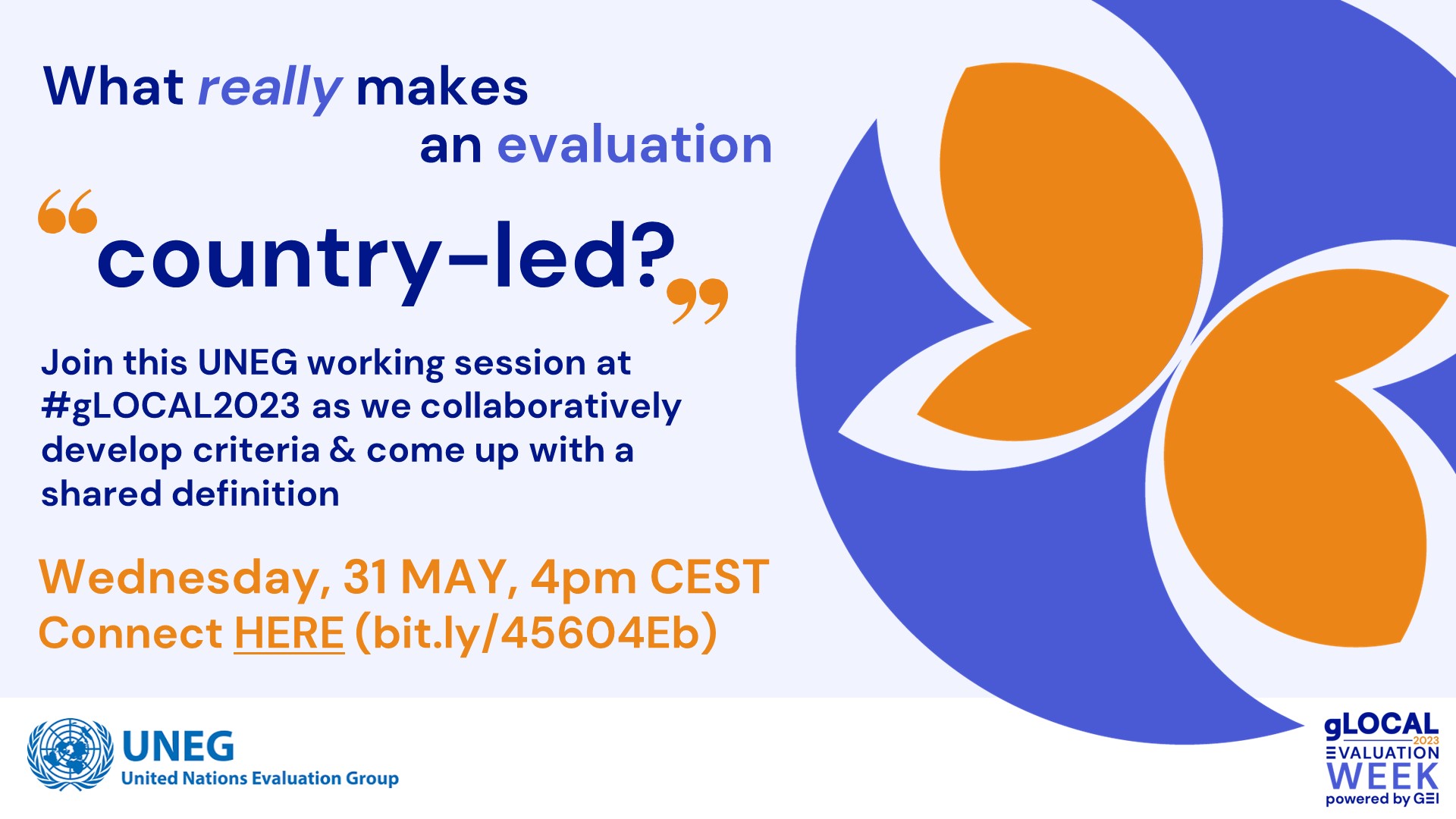
Join this participatory session open to ALL with UNEG and GEI to develop a definition of “country-led evaluation”!
Agenda 2030 highlights that review processes are to be “rigorous and based on evidence informed by country-led evaluations ….” In 2022, UNEG published a report on UN contributions to NECD, which recommends that UN agencies support country-led evaluations..
The Turin Agenda, the outcome document of the NEC Conference 2022, emphasizes that national evaluation systems need to “be led by national governments, respecting the principle of national ownership over the development process.”
What really makes an evaluation “country-led”? Together, can we come up with a definition or criteria?
Agenda 2030 highlights that review processes are to be “rigorous and based on evidence informed by country-led evaluations ….” In 2022, UNEG published a report on UN contributions to NECD, which recommends that UN agencies support country-led evaluations..
The Turin Agenda, the outcome document of the NEC Conference 2022, emphasizes that national evaluation systems need to “be led by national governments, respecting the principle of national ownership over the development process.”
What really makes an evaluation “country-led”? Together, can we come up with a definition or criteria?
Conférenciers
| Nom | Titre | Biography |
|---|---|---|
| Grace Igweta | Senior Evaluation Officer, WFP Office of Evaluation & Co-Coordinator UNEG NECD WG | Grace is leading WFP’s Office of Evaluation on capacity development, managing quality assurance systems and supporting decentralised evaluations. She has a Bachelor of Science degree from the University of Nairobi, a Master in Public Administration from University of York, and currently pursuing a PhD in Policy Research. |
| Timothy Lubanga | Commissioner for Monitoring and Evaluation in the Office of the Prime Minister, Uganda | Timothy is head of the Directorate of M&E in Office of the Prime Minister. His work involves among others overseeing and ensuring effective generation and use of information. He has been central in the growth and development of the National Monitoring and Evaluation systems and reforms in Uganda. |
Moderators
| Nom | Titre | Biography |
|---|---|---|
| Heather Bryant | Evaluation Advisor UNDP/GEI & Co-Coordinator UNEG NECD WG | Heather Bryant is a member of the Global Evaluation Initiative (GEI) Global Team, seconded from the UNDP Independent Evaluation Office (IEO). She is also one of the co-coordinators of the UN Evaluation Group National Evaluation Capacity Development Working Group. |
Résumé
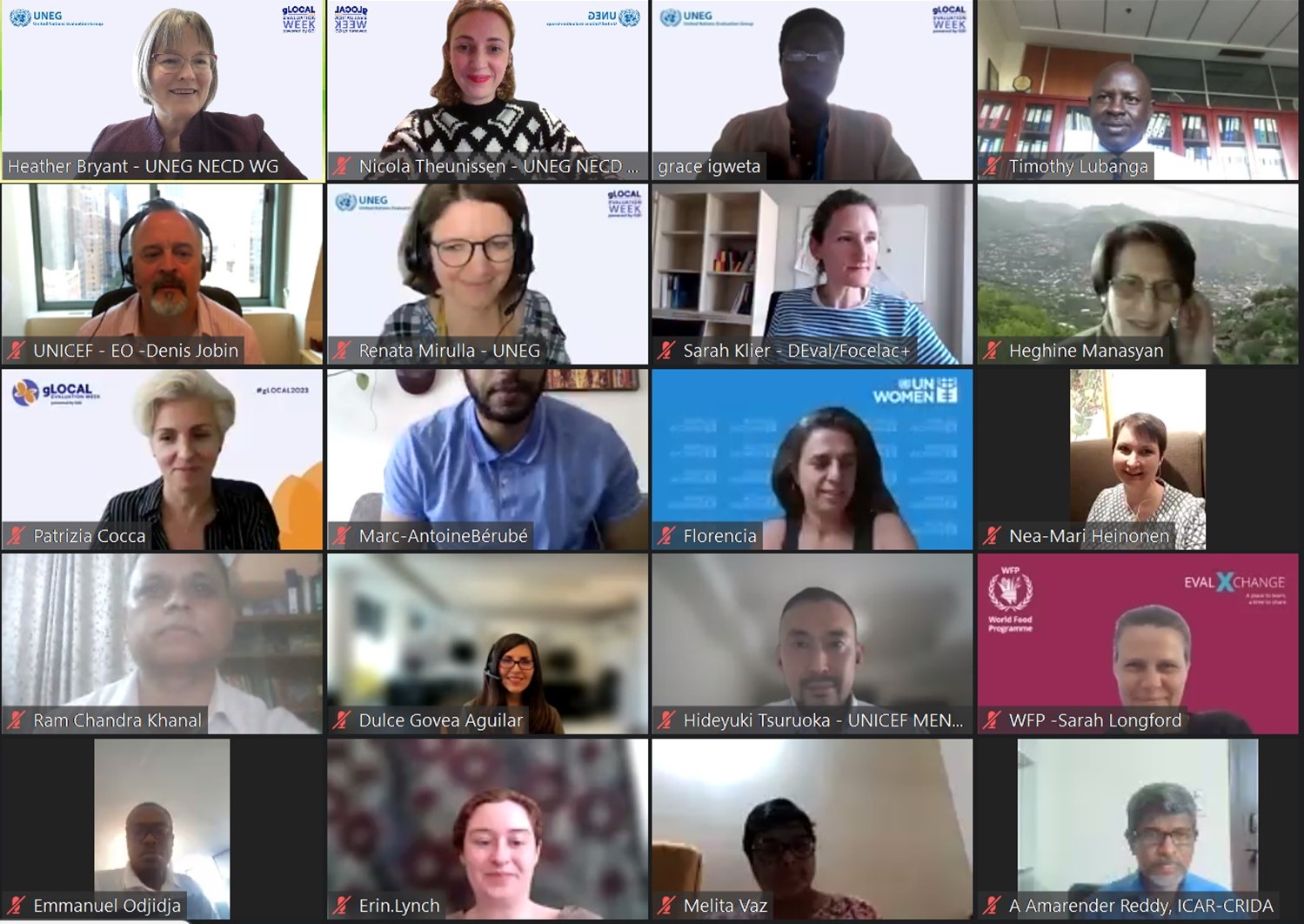
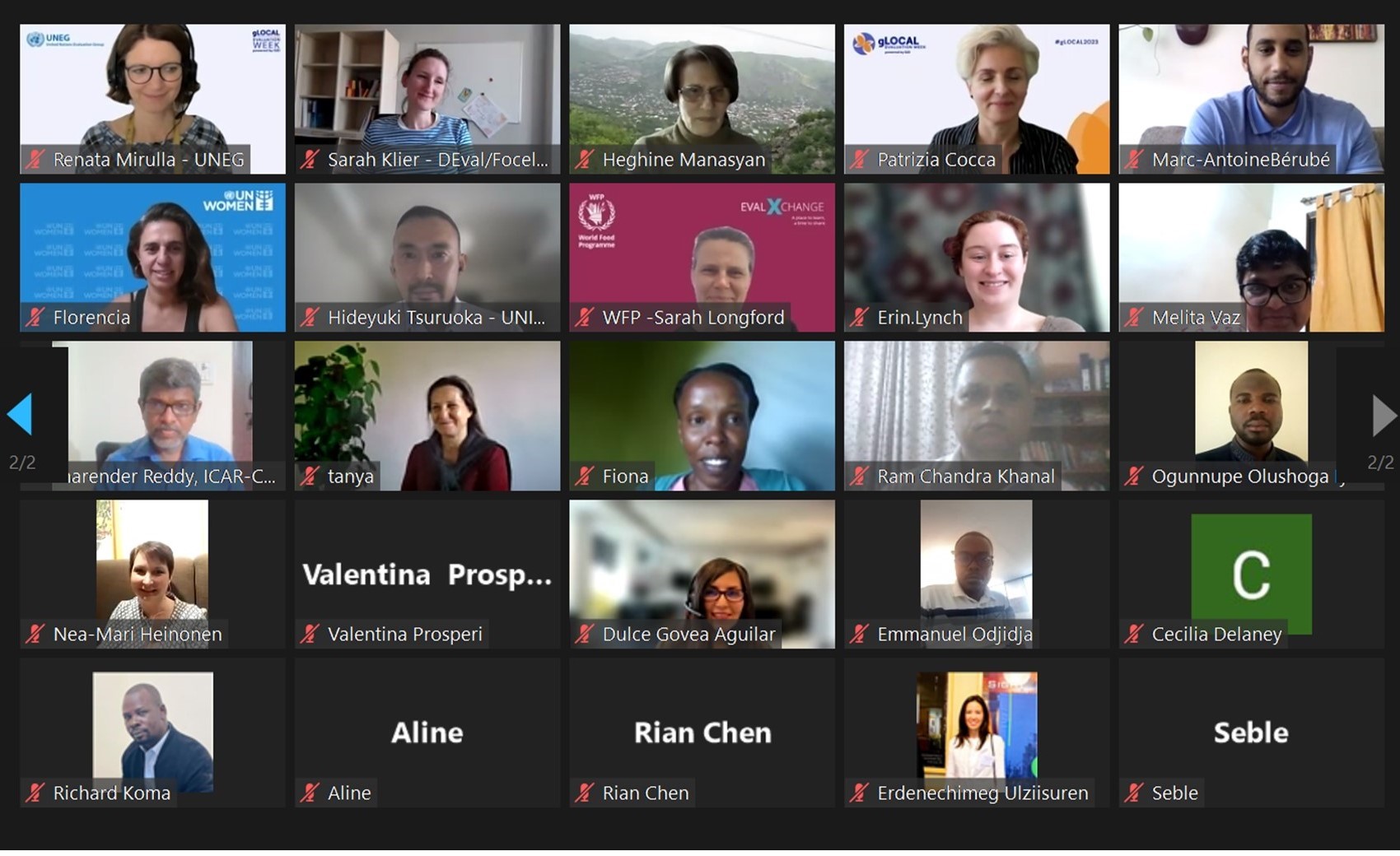
The criteria for what make an evaluation country-led should be viewed on a continuum, requesting from all actors to be conscious of the national capacity and context of the country where the evaluation is taking place. Some factors raised by Timothy Lubanga included the authority and level of awareness of the commissioning unit, funding ownership and management, the importance of stakeholder engagement, and visibility and brand ownership of the evaluation. Participants further supplemented the discussion by raising the following points for a true country-led evaluation: where the demand for the evaluation comes from, who signs it off, who leads the evaluation management process, and the level of using national and sectoral data.
The UNEG NECD working group will use participants’ inputs to develop an output document that highlights some initial criteria for an evaluation to be considered “country-led”. The document will be shared with participants, with the possibility of hosting a follow-up event to refine the inputs.
Image Gallery
Documents
Liens
- https://nec.undp.org/news/turin-agenda
- https://www.unodc.org/documents/evaluation/Guidelines/UN_GA_Resolution_A_RES_69_237.pdf
- https://www.unodc.org/documents/evaluation/Capacity_Development/UNEG_NECD_Report_April_2022.pdf
- https://www.undocs.org/Home/Mobile?FinalSymbol=A%2FRES%2F77%2F283&Language=E&DeviceType=Desktop&LangRequested=False