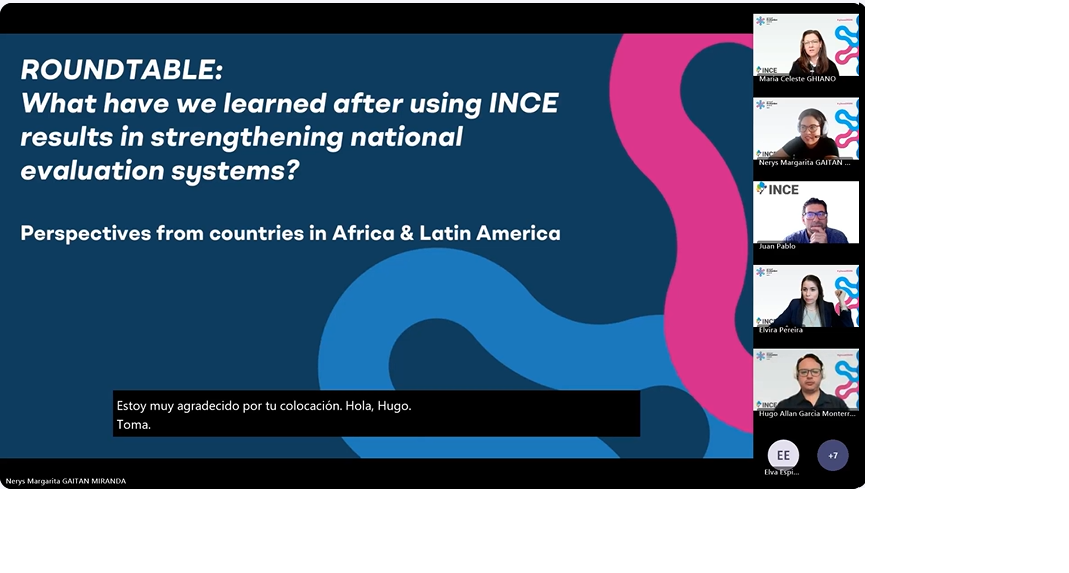
What have we learned after using INCE results in strengthening national evaluation systems? Perspectives from countries in Africa & Latin America
圆桌会议 | Online
-
Organized by:
INCE Initiative
About the Event
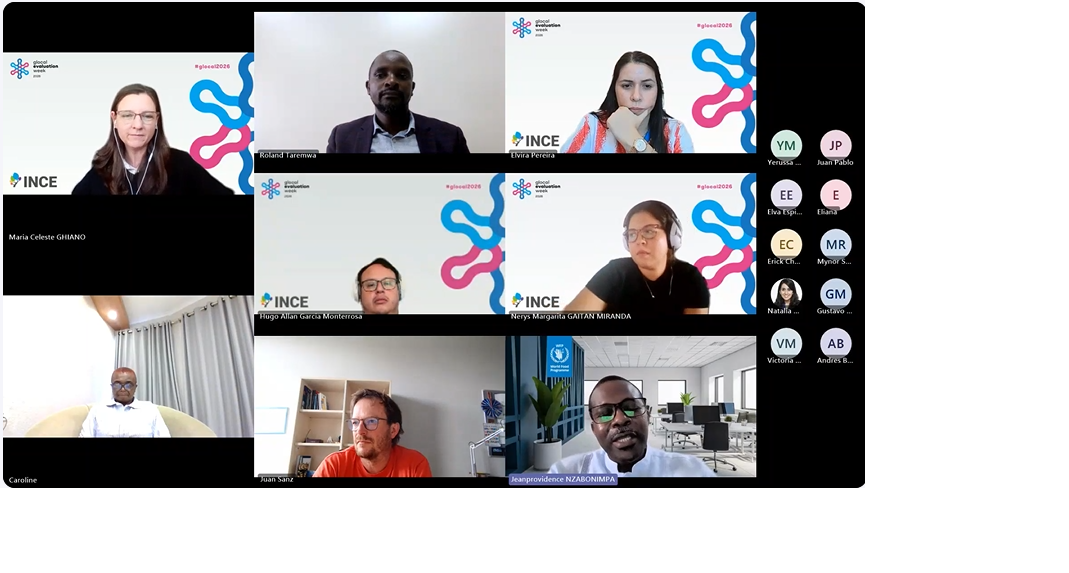
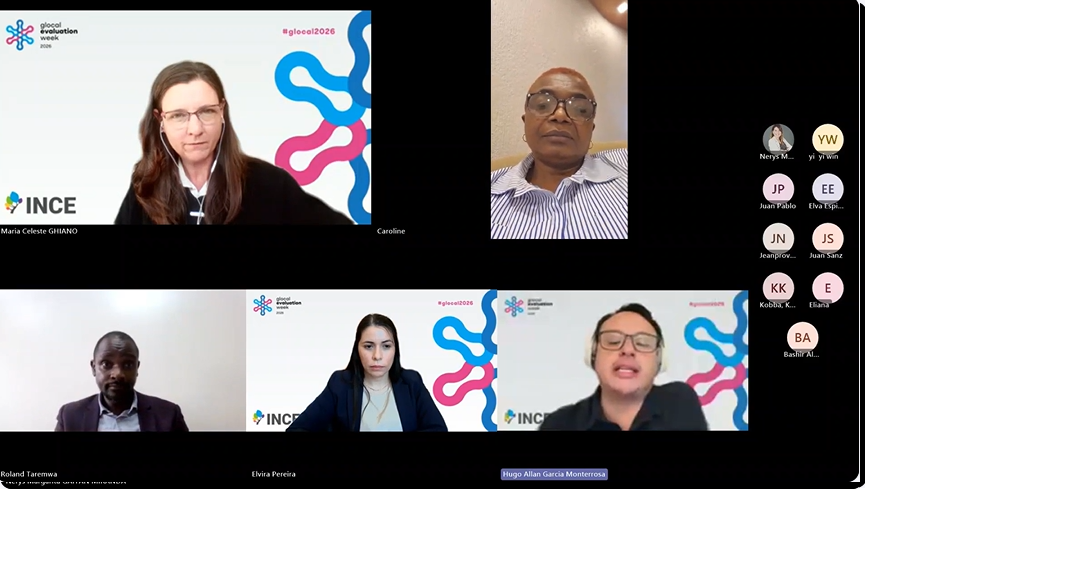
This roundtable will present experiences from countries across three continents on how they have used the National Evaluation Capacity Index (INCE) results to strengthen and optimize their National Evaluation Systems. The panel will facilitate an interactive dialogue with users and decision-makers, encouraging the exchange of insights and lessons learned to support the ongoing institutionalization of robust NES.
Speakers
| 名称 | 标题 | Biography |
|---|---|---|
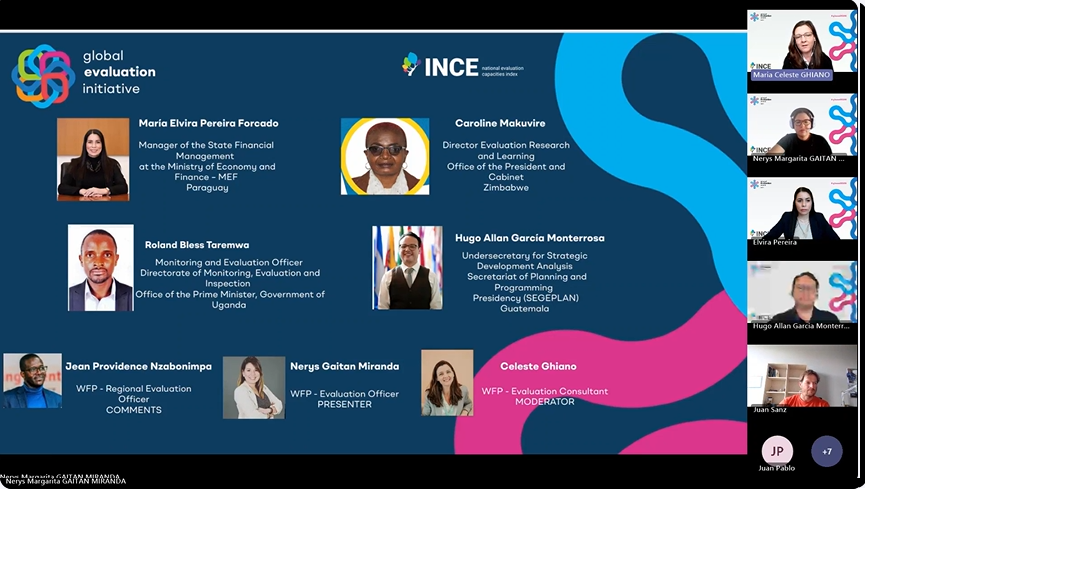
| Ms Caroline Makuvire | Director of Evaluation, Research and Learning - Office of the President and Cabinet- Zimbabwe | |
| Mr. Roland Bless Taremwa | Directorate of Monitoring, Evaluation & Inspection Office of the Prime Minister- Uganda | |
| Mrs. Elvira Pereyra | State Financial Management Manager- Ministry of Economy and Finance- Paraguay | |
| Mr. Hugo Allan García Monterrosa | Undersecretary of Strategic Analysis for Development - Secretariat of Planning and Programming, Presidency - Guatemala | |
| Presenter: Nerys Gaitán Miranda | Evaluation Officer - WFP Latin America | |
| Commenter: Jean Providence Nzabonimpa | Regional Evaluation Officer- WFP Southern Africa |
Moderators
| 名称 | 标题 | Biography |
|---|---|---|
| Celeste Ghiano | Evaluation Consultant- WFP Latin America | Senior Evaluation consultant with over 20 years of experience in both governmental and non-governmental sectors, and as a professor and researcher in Academia. Former General Coordinator of ReLAC 2021- 2024. WFP Consultant for INCE initiative since 2020. |
摘要
Lessons learned and recommendations
• Measurement is only the beginning (Guatemala): between the diagnosis and reform lies a deliberate
political and institutional process. The INCE score does not automatically produce change.
• Build coalitions before building the system: Guatemala’s Grupo Impulsor worked for over a year
before any agreement was drafted. Shared ownership is what makes institutions participate rather
than merely comply.
• Design for the culture you have, not the one you wish you had (Guatemala): transplanting
sophisticated systems from other countries creates obligations that institutions learn to formally meet
while practically ignoring.
• Political leadership is non-negotiable (Uganda): high-level political acceptance cascades down and
creates genuine demand for evaluation beyond the process itself.
• Make a national business case for INCE: Uganda linked INCE results to its National Development
Plan, generating institutional demand and budget questions from entities themselves.
• Integrate into existing events and cycles (Uganda): INCE validation was incorporated into Uganda
Evaluation Week, maximizing visibility and stakeholder reach.
• Inward-looking indicators and mandatory budgets (Zimbabwe/Caroline): KPIs must address local
realities, not external reporting demands; ring-fence evaluation funding.
• Shift from methodology to use (Paraguay): countries now have robust enough methods; the real
challenge is ensuring evaluation evidence systematically enters decision-making cycles
Follow up of the actions started by the countries´ partners regarding to:
• Guatemala: Designed the SINSE (Sistema Nacional de Monitoreo y Evaluación) via executive
decree, currently in final legal review, imminent publication. Six key elements: designated mandate for
SEGEPLAN, M&E units in every institution, multi-year national evaluation agenda, mandatory
evaluation budget lines, public results portal, and a multi-sectoral governance body.
• Uganda: Launched results dissemination at political levels (ministers, cabinet paper in progress);
updated 12-year-old evaluation standards; expanded M&E Community of Practice; updated National
Evaluation Agenda; conducting Regulatory Impact Assessment to determine need for an evaluation
law.
• Zimbabwe: Plans to update the National M&E Policy incorporating INCE findings; create a
centralized oversight body in the Office of the President; integrate mandatory evaluation budgets (7%
monitoring / 3% evaluation of program budgets) into program-based budgeting cycles.
• Paraguay: Reoriented strategy toward a medium-term capacity strengthening plan (horizon 2028),
with focus on participatory processes, use of evaluation findings in public management, and quality
over volume
Image Gallery