Undertaking rapid assessments and realtime monitoring in the COVID-19 context – lessons from UNICEF South Asia
线上活动
About the Event
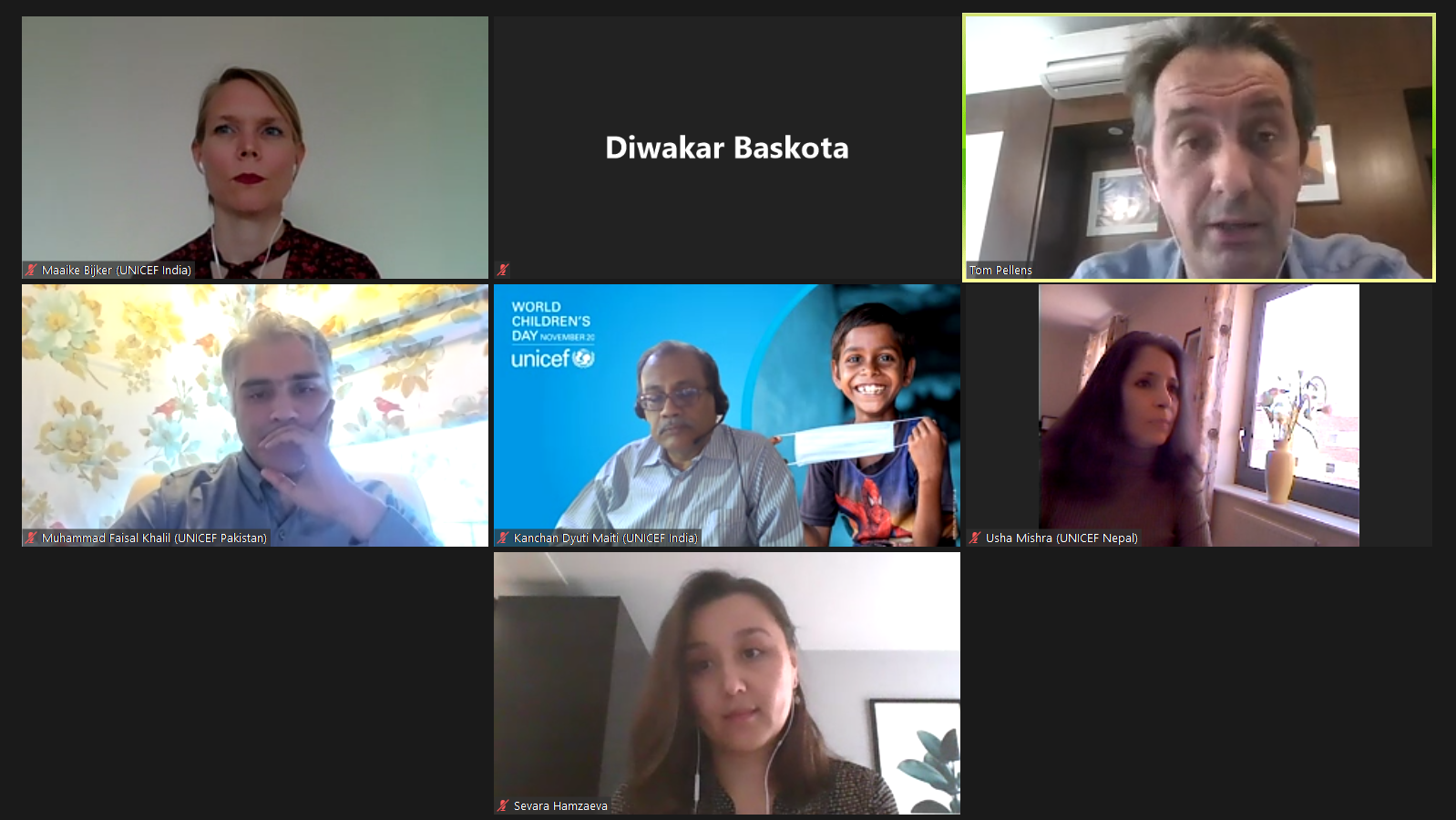
UNICEF ROSA and Country Offices will present their experience and lessons learned of implementing rapid assessments and real-time monitoring approaches, using remote data collection methods, to assess the Covid-19 situation, particular for vulnerable populations. UNICEF ROSA will share lessons of nine recent country cases, while the UNICEF Country Offices will present their approach: community-based monitoring focused on vulnerable groups (India), longitudinal rapid assessment of Covid-19 (Pakistan) and the Child and Family Tracker (Nepal). This is followed by discussion and Q&A with presenters about topics such as methodological trade-offs and evidence uptake.
Speakers
| 名称 | 标题 | Biography |
|---|---|---|
| K. D. Maiti | Planning, Monitoring and Evaluation Specialist | Mr. Maiti will present the longitudinal Community-Based Monitoring (CBM) mechanism, implemented by UNICEF India in partnership with Civil Society Organizations and community volunteers, to gather evidence directly from vulnerable families living in communities affected by COVID-19. |
| Muhammad Faisal Khalil | C4D RCCE Consultant | Mr. Khalil will share the experience of UNICEF Pakistan of implementing a longitudinal rapid assessment with national coverage using mobile technologies to rapidly gather community-level data to inform the Risk Communication and Community Engagement (RCCE) response to the COVID-19 pandemic. |
| Usha Mishra Hayes | Chief Social Policy, Evidence and Evaluation | Ms. Mishra Hayes will present UNICEF Nepal's Child and Family Tracker, a real time evidence generating exercise in the form of a national panel survey to rapidly and iteratively capture data for a comprehensive analysis of the evolving COVID-19 situation among children and their families. |
| Tom Pellens | Evaluation Specialist | Mr. Pellens will share the key lessons of a cross-case synthesis of nine rapid assessments and real time monitoring exercises implemented during the Covid-19 pandemic in six countries in the South Asian region. |
摘要
The Covid-19 pandemic has required adaptation in how evidence is collected. The different cases presented indicated that it is feasible to switch to remote data collection but it comes with challenges and limitations that need to be recognized. Solutions are available to address some of these challenges but may entail trade-offs in terms of comprehensiveness of the data collection, timing, investment in quality assurance measures, and representativeness.
Image Gallery