


Technology and Innovation in Building Transformational M&E Culture
Demonstration | Online
About the Event
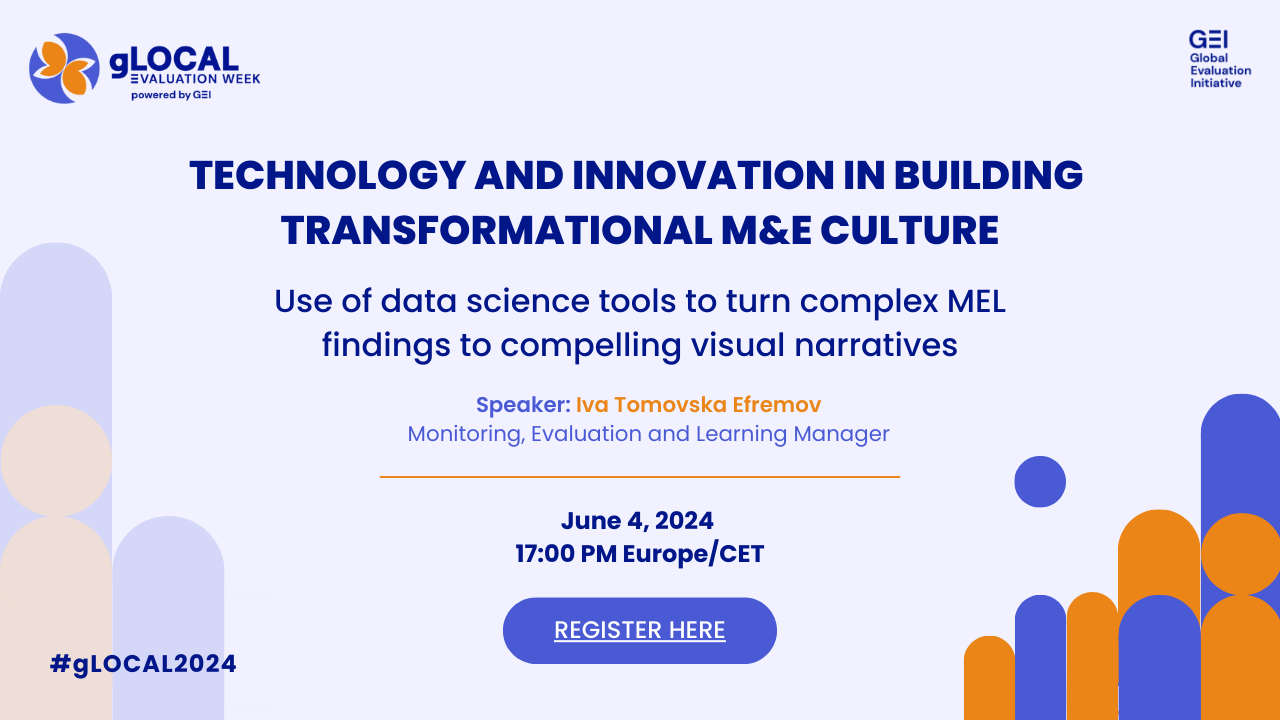
In policy interventions, decision-making, and M&E, the use of technology and data visualization is gaining its role as a transformative force. By turning complex M&E findings, datasets, and evidence into compelling visual narratives, it informs and guides decision-makers and engages and educates the wider public. The presentation will showcase examples of innovative data analysis tools and dashboards used to drive decision-making in international development (Regional Youth Cooperation Office and TechSoup programs) and collaboration between M&E and data science professionals. The use of visualization tools is contributing to impact and building a transformational M&E culture.
Speakers
| Nome | Título | Biography |
|---|---|---|
| Ivana Tomovska Efremov | Monitoring Evaluation and Learning Manager | MEL Manager and Development Strategist, Iva is a huge data enthusiast working to connect the dots of data science and international development. Iva is leading the TechSoup Europe and its portfolio of projects M&E systems and spent 11 years as a Program Manager and M&E Champion with Peace Corps. |
Resumo
In policy interventions, decision-making and M&E, the use of technology and data visualization is gaining its role as a transformative force. By turning complex M&E findings, datasets, and evidence into compelling visual narratives, it informs and guides decision-makers and engages and educates the wider public. The presentation showcased examples of innovative data analysis tools and dashboards used to drive decision-making in international development (Regional Youth Cooperation Office and TechSoup programs) and collaboration between M&E and data science professionals. The use of visualization tools is contributing to impact and building a transformational M&E culture.
Using innovative technological tools in MEL processes contributes to:
Communicating Results: Visual tools can effectively communicate results and impacts of development projects and programs.
Reporting: Using interactive dashboards and other visual tools as reports or addition to narrative reports makes them more impactful to a broader audience, donors and stakeholders.
Participatory MEL: Partners, beneficiaries, stakeholders can actively participate in the MEL process by contributing data and insights, leading to a more inclusive and comprehensive evaluation process.
Elevating MEL Culture: Inviting and engaging all key stakeholders to take active part in the MEL processes, to learn and turn to evidence-based decision-making processes.