


Brazil Evaluation Highlights Role of Public Policy in Protecting Smallholder Farmers from Climate Shocks
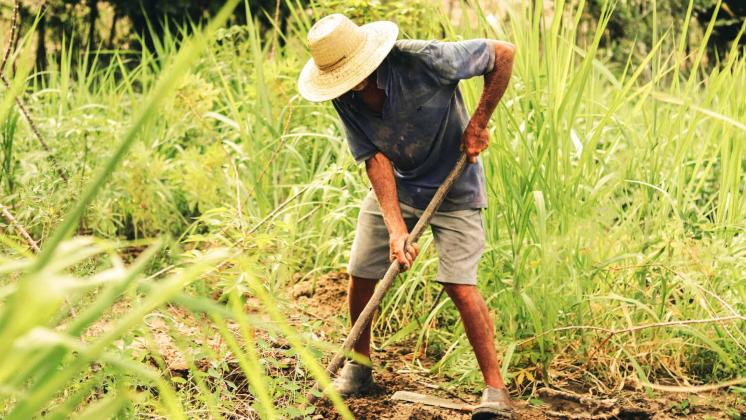
A recent rapid evaluation conducted by the Center for Learning on Evaluation and Results for Lusophone Africa and Brazil (CLEAR–LAB), an implementing partner of the Global Evaluation Initiative (GEI), assessed the performance of Brazil’s Garantia-Safra program—one of the country’s main social protection instruments for smallholder farmers affected by climate-related crop losses—and identified key opportunities for improvement.
Garantia-Safra provides financial support to smallholder farmers who experience significant crop losses due to events such as droughts and excessive rainfall. In parallel, the program includes a technical assistance component aimed at strengthening farmers’ resilience and promoting more sustainable agricultural practices.
The evaluation finds that the program addresses a critical challenge: the loss of livelihoods among smallholder farmers in vulnerable regions. While the cash transfer helps mitigate immediate income shocks, the technical assistance component is designed to tackle underlying structural issues, such as limited access to technology and climate-adapted practices. Overall, the program’s design is considered coherent, supported by a well-defined theory of change. However, the benefit amount has not been consistently adjusted for inflation, which may reduce its effectiveness over time.
A key finding relates to implementation gaps. While the cash transfer component is delivered as intended, the technical assistance component has not been effectively implemented, limiting the program’s potential to generate longer-term climate resilience. Despite these challenges, available evidence suggests that the program remains highly relevant for its target population. It contributes to income support, helps reduce food insecurity, and may increase access to microcredit among low-income farmers. Important evidence gaps remain, however—particularly regarding long-term impacts on income stability and broader regional resilience to climate risks.
Based on these findings, the evaluation recommends strengthening monitoring systems, improving outreach, expanding inclusion of vulnerable groups, and conducting future impact evaluations.
“The case highlights how rapid, evidence-based assessments can support more informed and timely decision-making — especially in policy areas shaped by increasing climate uncertainty,” said Caio Castro, a professor at FGV EESP - Escola de Economia de São Paulo and a researcher at CLEAR–LAB.
The full report is available in Portuguese on the CLEAR–LAB website.