Artificial Intelligence and Evidence Use in Caribbean Development Policy
Roundtable | Online
-
Organizado por:
Caribbean Evaluators International
- In partnership with: Caribbean Development Bank, Sir Arthur Lewis Institute for Social and Economic Studies
Sobre o evento
Artificial intelligence is beginning to influence how governments and development organisations generate, analyse, and use evidence for decision-making. In the Caribbean, regional organisations and development partners are exploring how emerging technologies may strengthen monitoring systems, policy analysis, and evidence-informed decision-making.
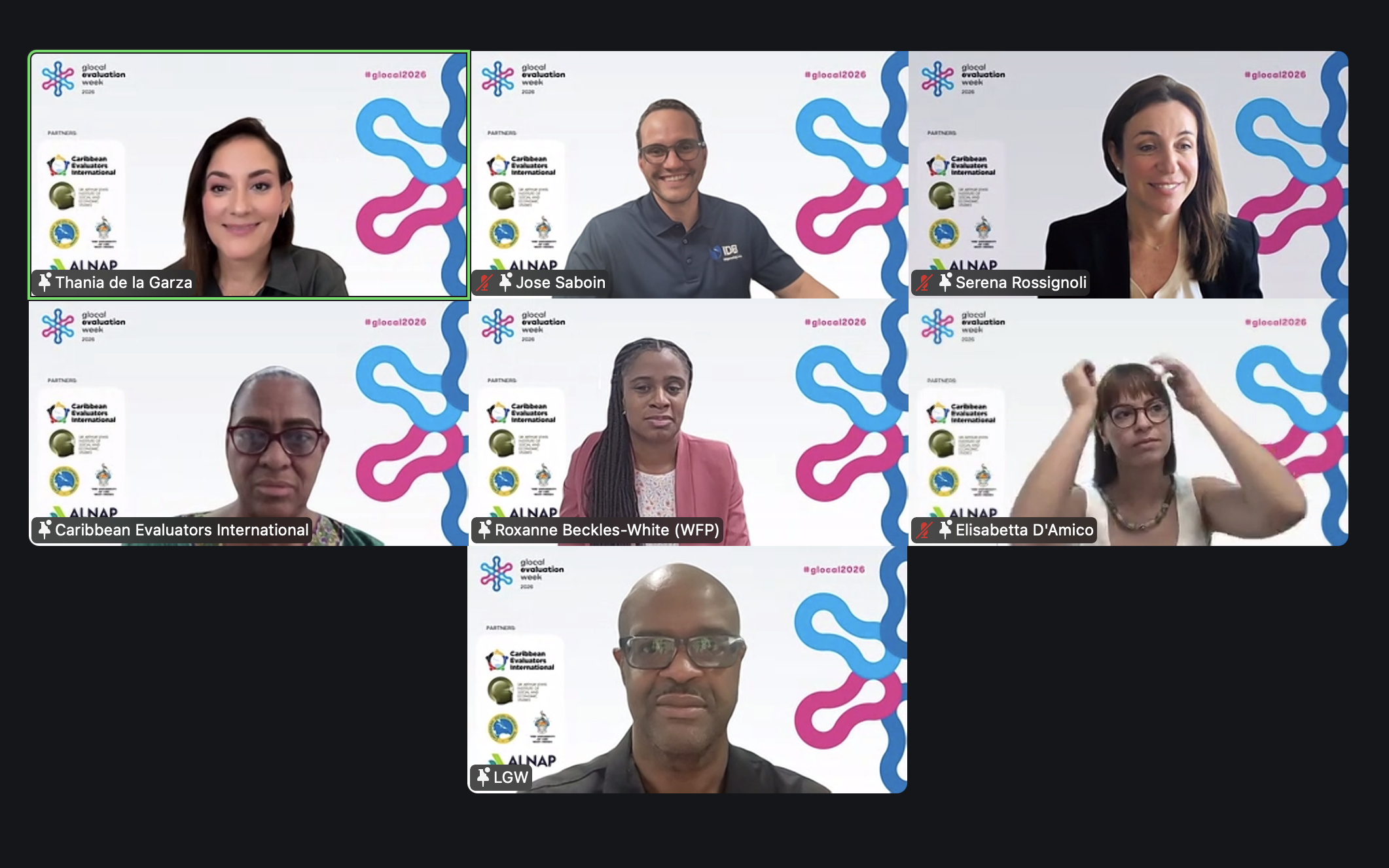
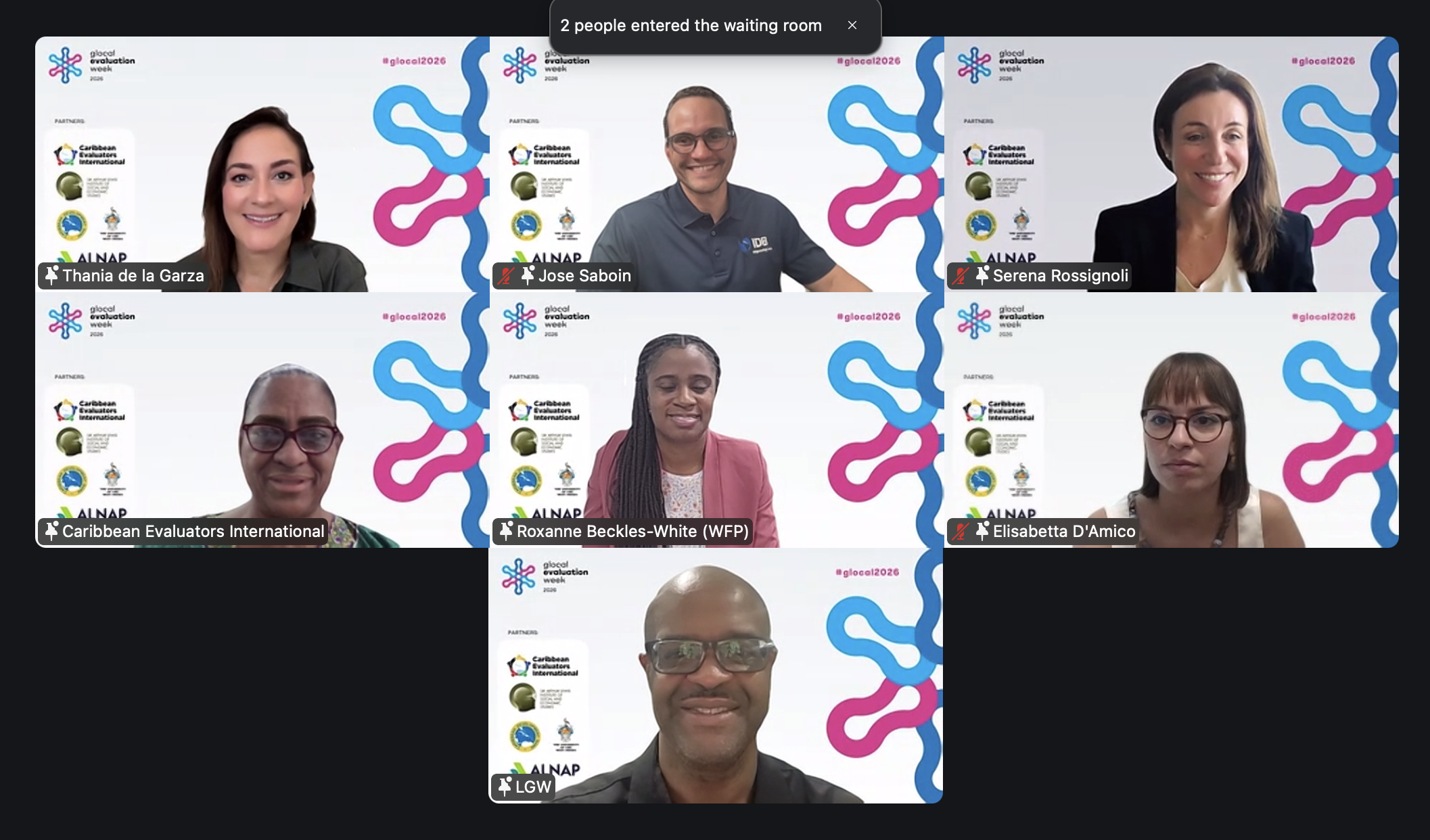
This roundtable will bring together representatives from regional institutions, development agencies, and government agencies to discuss how AI is shaping the production and use of evidence in development policy and programming.
This roundtable will bring together representatives from regional institutions, development agencies, and government agencies to discuss how AI is shaping the production and use of evidence in development policy and programming.
Orador/a
| Nome | Título | Biography |
|---|---|---|
| Serena Rossignoli, PhD. | Senior Evaluation Officer, Caribbean Development Bank | Serena is an evaluation leader with over 20 years of experience in international development, working across multilateral development banks, UN agencies, and international organizations. She has led and managed complex, multi-country evaluations across a range of sectors, contributing to institutional learning and evidence-based decision-making. Her professional experience includes work with UNESCO, the World Bank, UNDP, FAO, and the European Commission. She holds a Ph.D. in Evaluation and has authored numerous evaluation reports and analytical studies on development effectiveness and organizational performance. |
| Ms. Elisabetta D’Amico | Head of Vulnerability Analysis and Mapping (VAM) and M&E in the WFP Multi-Country Office in Barbados | Elisabetta has over seven years of international experience in data analytics, evaluation, and strategic advisory across Africa, the Middle East, Central Asia, and the Caribbean. In her current role, she leads data-driven strategies and AI-enabled decision-support tools to inform policy and operations. She holds an MSc in Development Economics (Distinction) from the University of Manchester and combines strong technical skills with a proven ability to translate complex data into actionable insights for policy and programming. |
| Mr. José Luis Saboin | Economics Specialist in the Caribbean Country Department of the Inter-American Development Bank (IDB) | José Luis previously worked in the Andean Country Department of the Inter-American Development Bank and the Western Hemisphere Department of the International Monetary Fund. He has led research and data collection projects across Latin America and the Caribbean. His expertise includes development macroeconomics, fiscal policy, digitalization, nowcasting, and technology adoption. He holds a Master’s from Columbia University and a PhD in Economics from George Mason University. |
| Professor Lloyd Waller, PhD | Head, Sir Arthur Lewis Institute for Social and Economic Studies (SALISES) | Lloyd Waller is a leading Caribbean expert in artificial intelligence, digital transformation, tourism resilience, and development policy. He serves as Director of SALISES, Global Director of the Global Tourism Resilience and Crisis Management Centre, and Senior Advisor to Jamaica’s Minister of Tourism. His work promotes AI readiness, digital inclusion, evidence-based policymaking, and resilient development. He also brings extensive expertise in Monitoring, Evaluation and Learning (MEL), mixed-methods research, data analytics, impact assessment, and results-based management |
Moderators
| Nome | Título | Biography |
|---|---|---|
| Thania de la Garza | Senior Evaluation Specialist, Caribbean Development Bank Office of Independent Evaluation | Thania is a senior evaluation specialist with more than 20 years of experience in monitoring and evaluation systems, evidence-informed policymaking, and institutional strengthening across Latin America and the Caribbean. In her current role she leads thematic and country-level evaluations in areas such as youth, resilience, water, and social development. Formerly Head of Evaluation at CONEVAL, she coordinated over 2,800 public policy evaluations. She also co-founded Globall – Evidence for Results and supports global evaluation capacity development initiatives |
Resumo
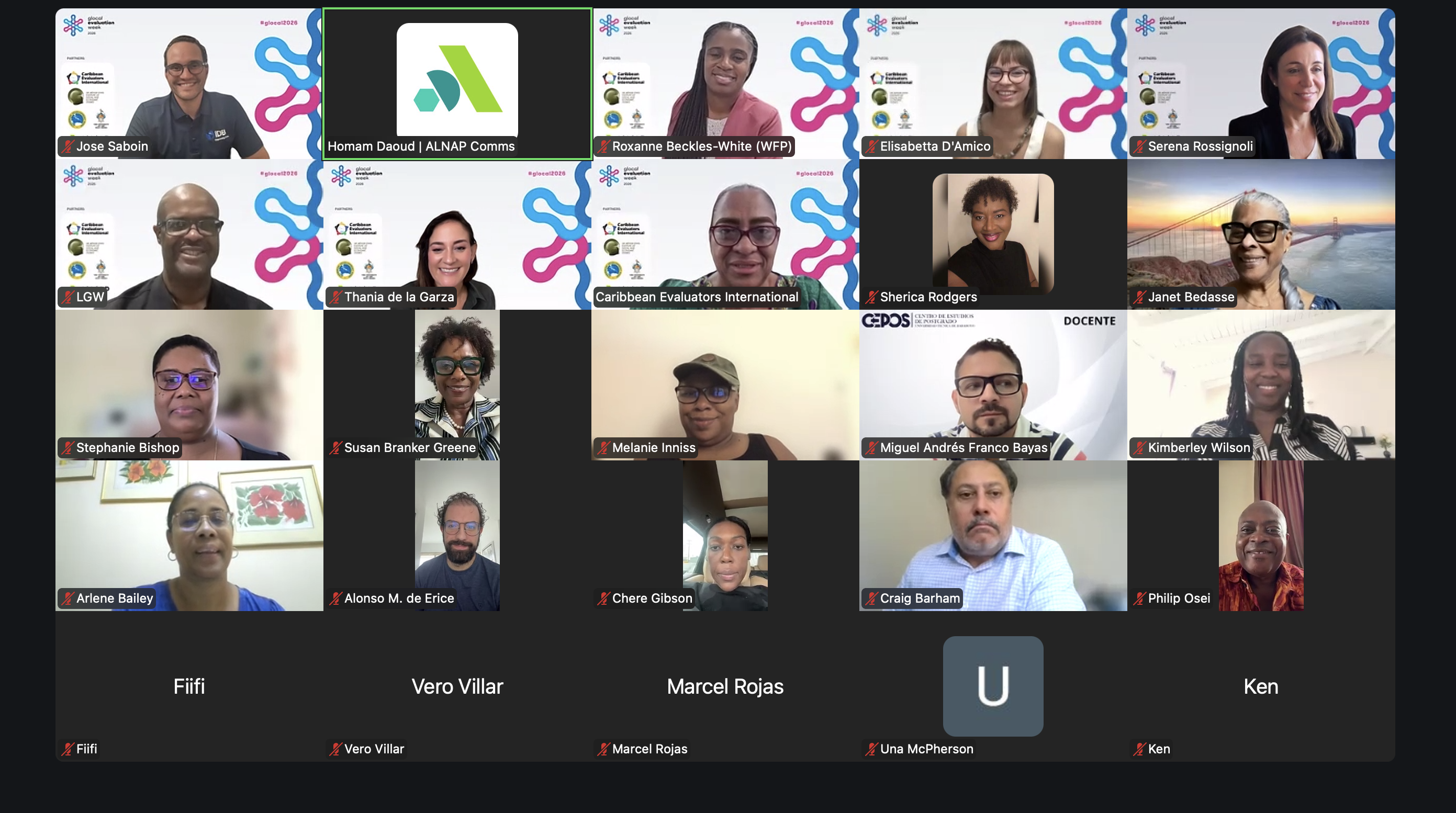
This roundtable explored how AI is reshaping the production, analysis, and use of evidence for development policy in the Caribbean. Speakers from the World Food Programme, the Inter-American Development Bank, the Caribbean Development Bank, and academia presented practical applications ranging from AI-enabled disaster response assessments and economic forecasting to evidence synthesis and institutional knowledge management. A common message emerged: AI should enhance, not replace, human judgment. Participants emphasized the need for transparency, strong governance frameworks, data quality standards, ethical safeguards, and human oversight to maintain trust, credibility, and accountability in evidence-informed policymaking.
Key priorities include developing institutional AI governance frameworks, documenting AI-assisted processes to ensure transparency and reproducibility, strengthening staff capacities in AI, data science, and evidence use, and promoting regional collaboration among development organizations. Participants also highlighted the importance of piloting and refining AI platforms, investing in responsible innovation, and ensuring that AI applications remain explainable, auditable, and consistently guided by human expertise throughout policymaking and evaluation processes.
Image Gallery