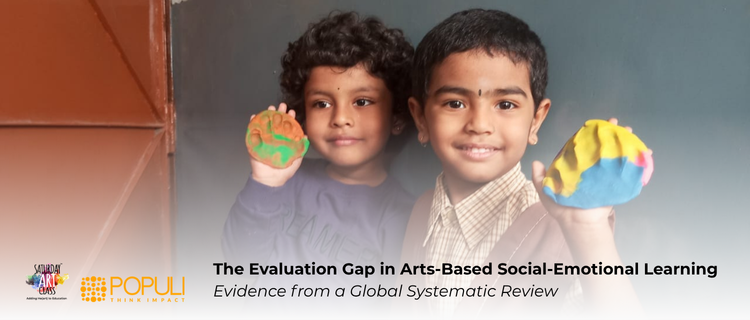
The Evaluation Gap in Arts-Based Social-Emotional Learning: Evidence from a Global Systematic Review
Webinar (em inglês) | Online
-
Organizado por:
Saturday Art Class
- In partnership with: Populi
Sobre o evento
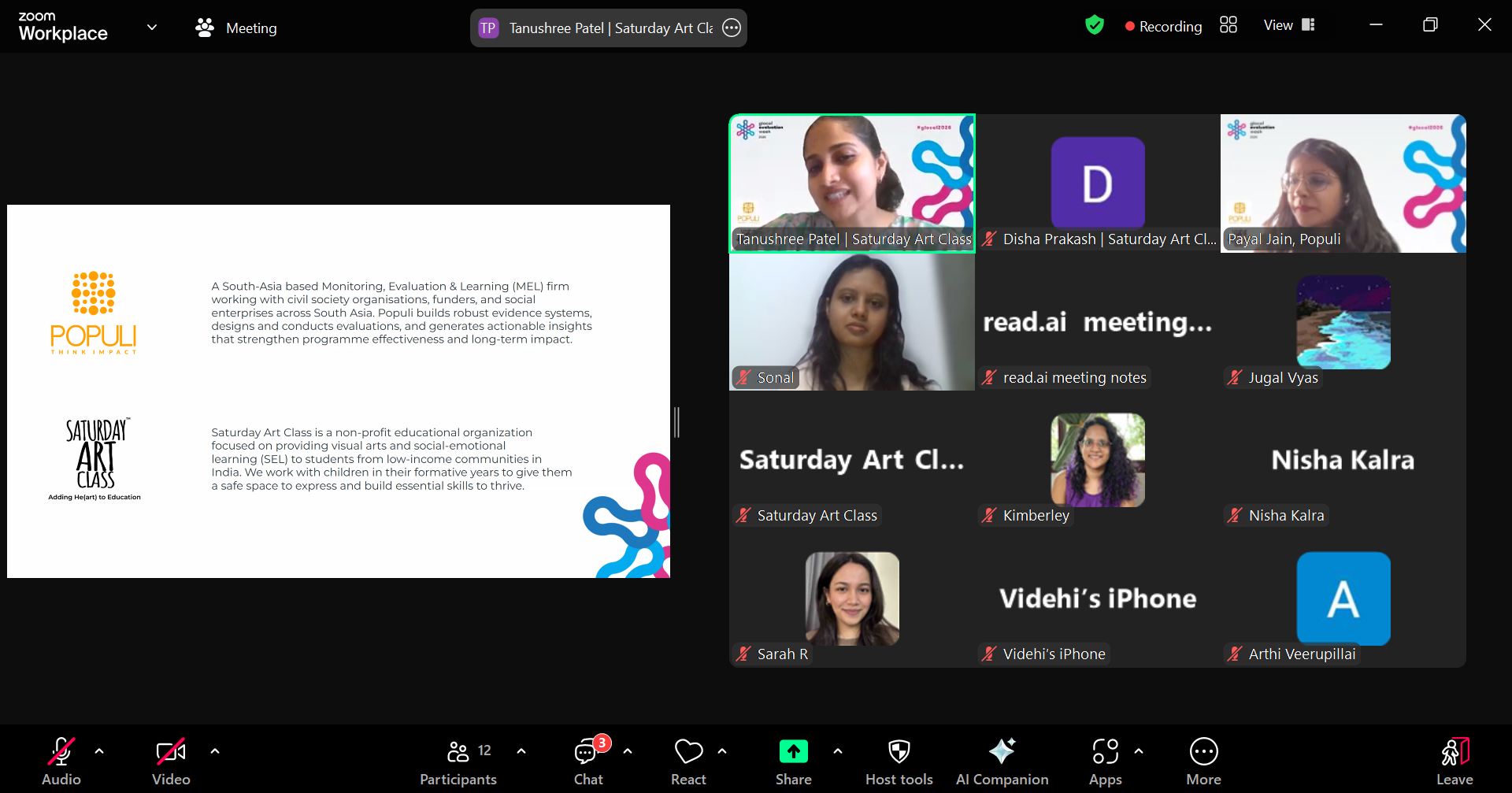
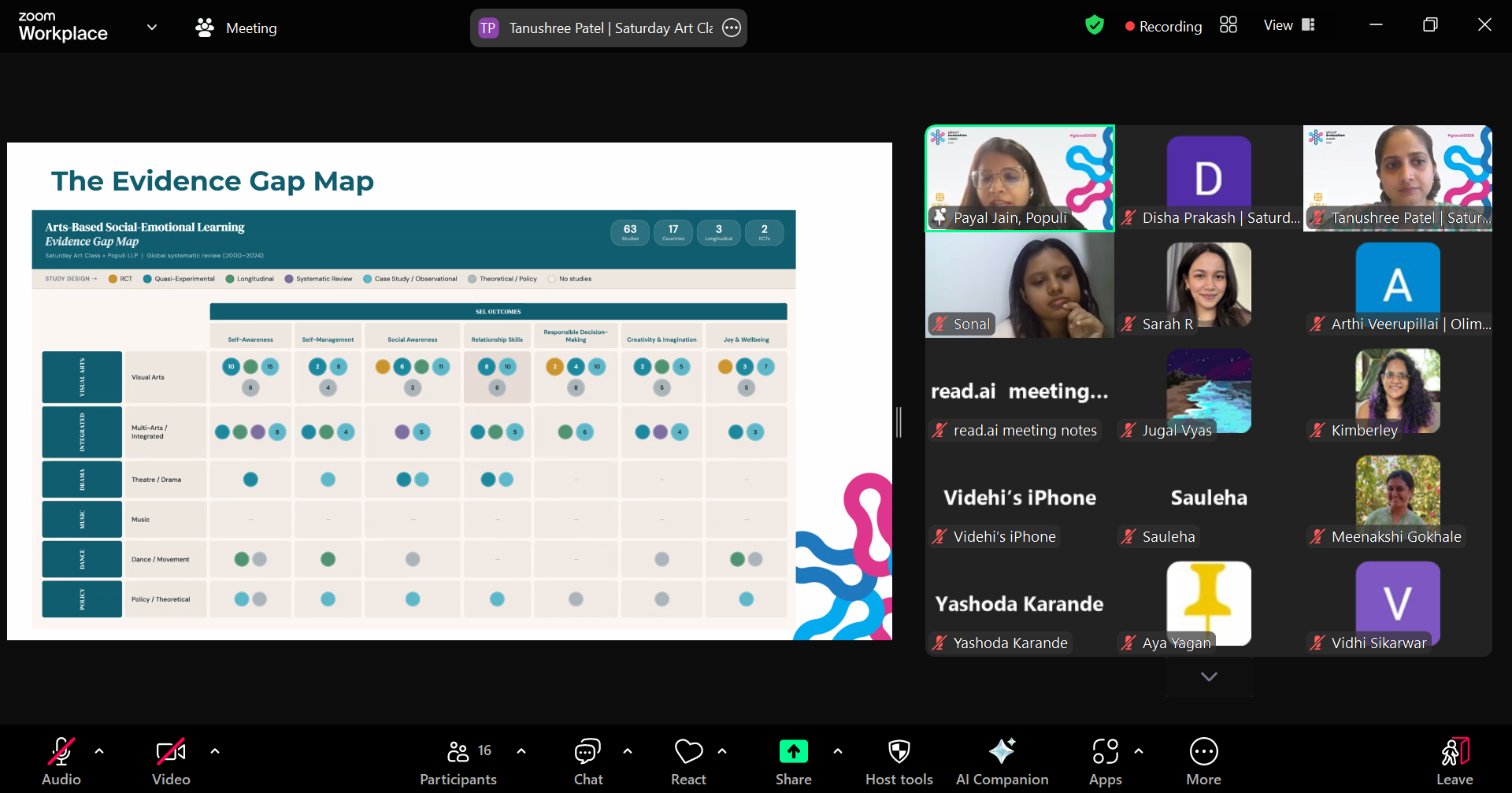
This webinar explores the “evaluation gap” in arts-based Social-Emotional Learning (SEL) through findings from a global Evidence Gap Map of 63 studies. It highlights three key challenges i.e. geographic bias, lack of longitudinal research, and absence of observational tools that limit credible evidence, especially in low-resource contexts from the global south. The session will unpack why current methods fail to capture real impact and discuss pathways to build stronger, context-responsive evaluation approaches for arts-based SEL.
Orador/a
| Nome | Título | Biography |
|---|---|---|
| Tanushree Patel | Head, Research and Impact | Tanushree Patel is Head of Impact & Research at Saturday Art Class, leading evidence-building at the intersection of arts and SEL in public education. A Teach For India alumna, she has 8+ years’ experience in the development sector. |
| Payal Jain | Co-founder | Payal is a Monitoring, Evaluation, and Learning (MEL) practitioner with experience designing evaluations for nonprofits, education programs, and fellowships across South Asia. Through Populi, she supports organisations in building evidence, generating insights & strengthening program effectiveness. |
Resumo
The discussion focused on challenges in evaluating arts-based SEL interventions, including measuring outcomes such as creativity, empathy, imagination, and emotional expression. Participants explored the strengths and limitations of different evaluation methods, the role of observation and stakeholder feedback, and the need for culturally relevant and context-specific assessment tools. The conversation also highlighted the importance of clearly defining social-emotional constructs before attempting to measure them.
Participants shared reflections from their own experiences with arts-based learning and evaluation. Several participants emphasized the value of mixed-method evaluation approaches, noting that surveys or interviews alone often fail to capture the full impact of arts-based interventions. Concerns were also raised about observer bias in classroom observations and the influence of an evaluator's perspective on findings. Participants further highlighted the need for child-friendly, culturally relevant measurement tools and stressed the importance of involving students, teachers, and parents in understanding and defining social-emotional outcomes.
Image Gallery