


Taming the Feed: Leveraging Evaluation Practices to Counter Polarization on Social Media
Roundtable | Online
-
Organizado por:
Global Evaluation Initiative
- In partnership with: UNFPA Independent Evaluation Office
Sobre o evento
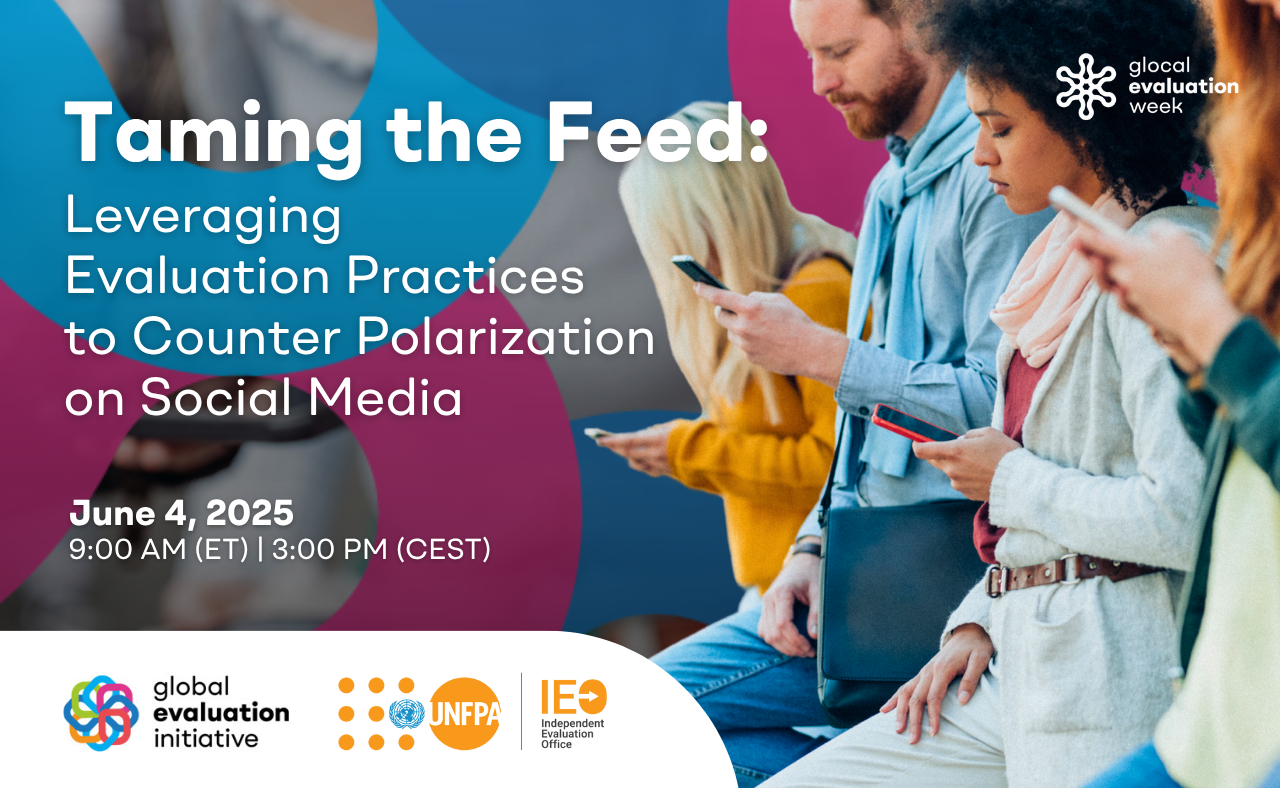
More than five billion people or 63% of the global population are now using social media. Platforms like X and Facebook have become top sources of news and information, evolving into arenas for public debate even though they were never designed for that purpose.
On one hand, this demonstrates the power of social media to connect, inform, and amplify voices. On the other, it reveals its capacity to fuel polarization and erode civil discourse. If we’re not intentional and mindful about our social media activities, we risk contributing to this unhealthy dynamic.
Success on social media is often measured by how many likes, shares, and reposts we get. These metrics are shaped by algorithms that reward engagement. This boosts visibility for our brands and messages, but it also limits our exposure to diverging views and traps us in echo chambers. The very system that rewards engagement also drives polarization.
So, if our usual social media practices are part of the problem, what can we do differently? And what evaluation practices and standards can we apply to our online activities to counter polarization?
This Glocal session invites social media users and communications professionals to reflect on their roles in shaping the online space and explore how they can work together to counter polarization and foster dialogue that builds bridges and overcomes divisions.
OBJECTIVES:
1. Raise awareness of how polarization plays out on social media and how we may unintentionally contribute to it.
2. Explore evaluation practices and standards that can be applied to social media to counter polarization.
3. Explore more meaningful metrics for measuring the success of social media activities.
4. Foster collaboration and peer learning among social media users and communications professionals.
On one hand, this demonstrates the power of social media to connect, inform, and amplify voices. On the other, it reveals its capacity to fuel polarization and erode civil discourse. If we’re not intentional and mindful about our social media activities, we risk contributing to this unhealthy dynamic.
Success on social media is often measured by how many likes, shares, and reposts we get. These metrics are shaped by algorithms that reward engagement. This boosts visibility for our brands and messages, but it also limits our exposure to diverging views and traps us in echo chambers. The very system that rewards engagement also drives polarization.
So, if our usual social media practices are part of the problem, what can we do differently? And what evaluation practices and standards can we apply to our online activities to counter polarization?
This Glocal session invites social media users and communications professionals to reflect on their roles in shaping the online space and explore how they can work together to counter polarization and foster dialogue that builds bridges and overcomes divisions.
OBJECTIVES:
1. Raise awareness of how polarization plays out on social media and how we may unintentionally contribute to it.
2. Explore evaluation practices and standards that can be applied to social media to counter polarization.
3. Explore more meaningful metrics for measuring the success of social media activities.
4. Foster collaboration and peer learning among social media users and communications professionals.
Orador/a
| Nome | Título | Biography |
|---|---|---|
| Bikem Ahiska | Communications Analyst, UNFPA Independent Evaluation Office | |
| Claudia Olavarría | Evaluation and Communications Expert, Global Evaluation Initiative | |
| Rosetti Rivera | Digital Communications Specialist, Global Evaluation Initiative |
Moderators
| Nome | Título | Biography |
|---|---|---|
| Patrizia Cocca | Communications and Knowledge Management Lead, Global Evaluation Initiative |
Resumo
Key Points:
Understanding Polarization and Its Impacts -
The session explored how polarization takes shape on social media. Rosetti Rivera highlighted the dangers of echo chambers, online spaces where individuals are primarily exposed to views that align with their own. These environments can encourage extreme perspectives and diminish empathy, often spilling over into real-world interactions.
Echo chambers form when social media algorithms cluster users based on the content they like, share, or engage with. In turn, these algorithms amplify content that drives engagement, frequently prioritizing sensational or divisive narratives over balanced, constructive dialogue. This dynamic is driven by the platform's obsession with engagement, which is measured in likes, shares, and clicks.
Yet, while engagement is a valuable indicator of whether content resonates with audiences, it shouldn’t be the sole measure of success. A more thoughtful approach is needed, one that values not just reach, but reflection, connection, and dialogue.
Eval4Action Campaign: Measuring Real Impact Beyond Social Media Metrics -
Bikem Ahiska showcased the Eval4Action campaign as a compelling example of how to assess the true impact of communications, going beyond social media engagement metrics. Launched during the COVID-19 pandemic, Eval4Action aims to mobilize global efforts to advance the Sustainable Development Goals through stronger evaluation practices. The campaign has brought together over 170 partners worldwide, building meaningful cross-sector collaboration.
Ms. Ahiska emphasized that while social media metrics like likes and shares offer useful insights, they are not sufficient on their own. The real value lies in converting digital engagement into concrete actions. Eval4Action illustrates how communications can drive change on the ground, proving that real-world impact is the ultimate measure of success.
Ten Evaluation Practices for Inclusive Engagement Online -
Claudia Olavarría presented ten evaluation practices that can enhance constructive engagement on social media. These practices include using inclusive language, encouraging participatory approaches, and engaging diverse voices to break down echo chambers. She emphasized the need for ethical communication that prioritizes truthfulness and evidence-based content, urging social media managers to adopt evaluation principles to foster healthier online discussions. This approach can help bridge divides and promote a more nuanced understanding of complex issues. (See attached document for details.)
Ethical Considerations for Digital Presence
During the Q&A segment, participants raised questions about the ethical implications of maintaining a presence on platforms that may not align with organizational values. The speakers emphasized the importance of ongoing internal discussions to assess the appropriateness of digital channels and to ensure that communication strategies resonate with the organization’s core values. Regular evaluations of social media practices can help organizations navigate the evolving landscape of digital communication responsibly.
Monitoring and Evaluating Social Media Effectiveness
In response to audience inquiries, the panel discussed methods for monitoring the effectiveness of social media posts. They suggested establishing clear communication goals and utilizing both quantitative metrics (like engagement rates) and qualitative assessments (like the diversity of conversation) to evaluate impact. This holistic approach can provide insights into how effectively messages are being communicated and how they resonate with audiences, ultimately guiding future strategies.