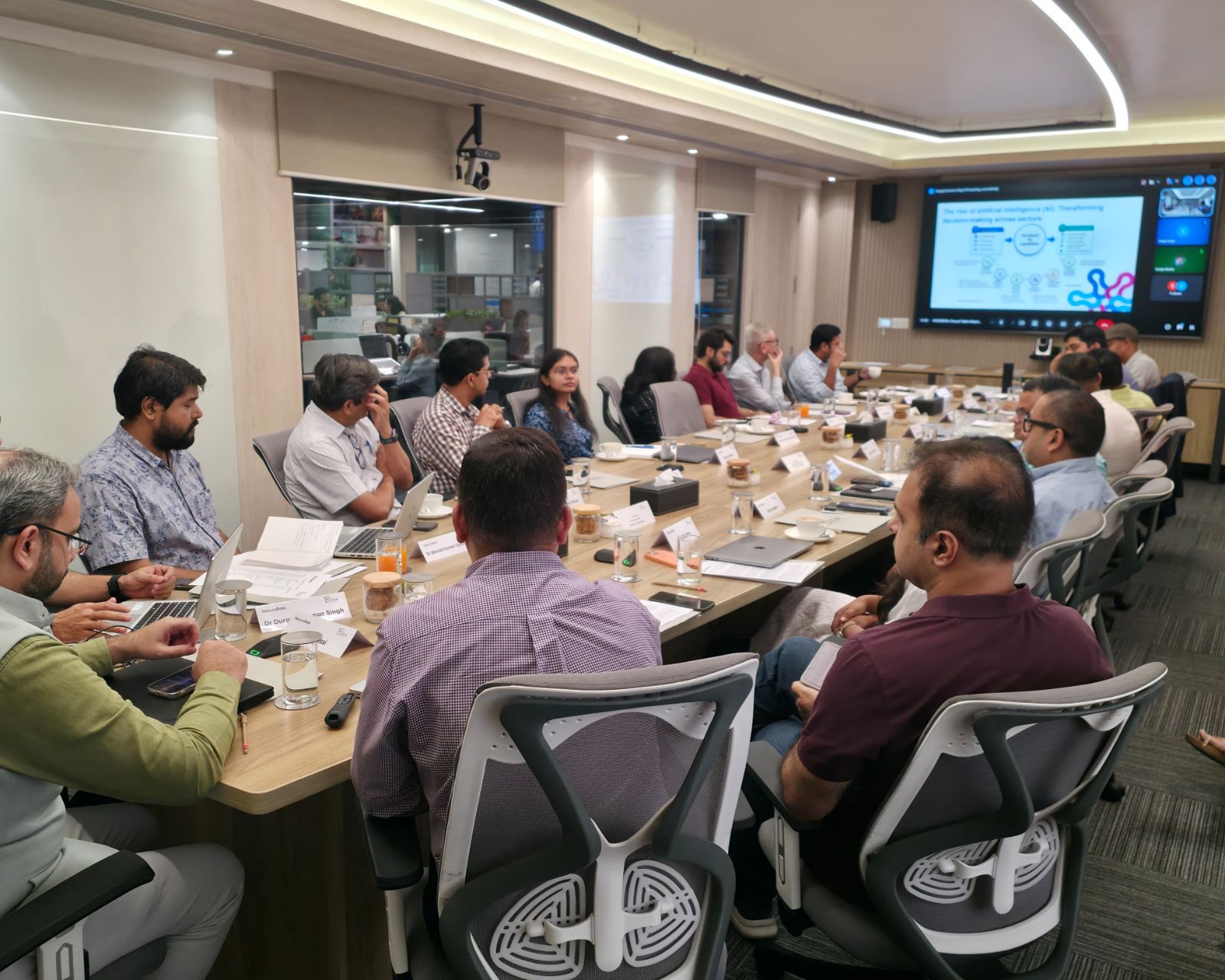
From Data to Decisions: Leveraging AI for Evidence-Based Water Management.
Roundtable | Hybride
-
Organisé par:
Council on Energy, Environment and Water (CEEW)
À propos de l'événement
The objective of the roundtable is to deliberate and explore the use of AI-enabled monitoring approaches, including digital twins and sensor-based systems, to address water quality and quantity challenges and support sustainable water resource management. The discussions will foster mutual learning by bringing together diverse perspectives on how the AI-enabled tools can be leveraged to improve monitoring efficiency, generate data, reduce costs, and support scalable and accessible solutions in developing countries like India. The session will also facilitate shared understanding of key challenges, including financial needs, data availability, training needs, and model limitations, and probable solutions for them.
Conférenciers
| Nom | Titre | Biography |
|---|---|---|
| Nitin Bassi | Mr. | Fellow and Team Lead at CEEW, working on water policy, circular economy, water risk assessment, and water-energy-food nexus. |
| Mohammad Aatish Khan | Mr. | Co-founder of NatureDots, focusing on AI-driven environmental monitoring and water quality assessment solutions. |
| Snehal Verma | Ms. | Co-founder of NatureDots and works on AI-enabled environmental monitoring and data analytics for smart water quality solutions. |
| Manish Kumar (Tentative) | Dr. | Group Head of Adaptation and Risk Analysis at CSTEP, working on policy research in adaptation and climate risk with a focus on data-driven solutions. |
Résumé
The roundtable highlighted both the promise and the limitations of AI-enabled approaches to water governance. While Digital Twins, virtual sensors, and predictive systems offer significant opportunities for improving monitoring, planning, and evidence-based decision-making, participants consistently emphasised that technology alone cannot solve water-governance challenges.
The discussion reinforced the need to combine technological innovation with strong governance systems, contextual scientific understanding, institutional collaboration, transparency, and meaningful community engagement. Participants expressed strong interest in continued collaboration, pilot-based learning, and knowledge sharing to further strengthen the role of AI-enabled systems in sustainable water governance and river management in India.
1. Prepare and circulate the proceedings of the roundtable discussion, including key insights and recommendations, with all participants and relevant stakeholders.
2. Organise a workshop session on the Yamuna Digital Twin and AI-enabled monitoring systems to further discuss methodology, validation, and potential applications.
3. Continue stakeholder engagement and collaborative dialogue on AI-enabled water governance, data-sharing mechanisms, and future implementation opportunities.
4. Document and disseminate key learnings, case studies, and implementation experiences emerging from the discussion and pilot initiatives.
5. Explore opportunities for future collaboration, pilot studies, and capacity-building activities related to AI-enabled river and water-resource management.
Image Gallery