Ensuring Data Integrity for Impact: Process Monitoring as a Foundation for Trustworthy Evidence in the Age of AI
Seminario web | En línea
-
Organizado por:
International Development Enterprises (iDE)
Sobre el evento
Trustworthy evidence is vital in times of uncertainty. Process Monitoring assesses the quality and consistency of financial and M&E systems via spot checks, reviews, field visits, and interviews. This type of MERL activity can identify, for example, whether reported activities match on-site realities, or if gaps exist in documentation. With increasing reliance on rapidly-changing AI and digital systems to fill resource gaps, this session will show how triangulating results through Process Monitoring is essential to ensure data reliability, and strengthen evaluation credibility.
Presentador/a
| Nombre | Título | Biografía |
|---|---|---|
| Rakesh Kothari, Ph.D. | MERL Lead | Rakesh Kothari, Ph.D. has made significant contributions in the field of monitoring and evaluation profession, with extensive research background that encompasses both quantitative and qualitative methodologies. His scholarly pursuits have explored pivotal areas such as adaptation, poverty alleviation, market system resilience, economic growth, inclusion, good governance, IT sector development, rural and agricultural development, health, nutrition, and resource management. With the completion of a Ph.D. in sociology, Dr. Kothari brings a profound understanding of societal dynamics to his work. With more than twenty years of experience, Dr. Kothari has led multiple multisectoral projects in Nepal and has navigated a variety of geopolitical environments with skill and understanding. His pivotal role as the lead for M&E activities for iDE’s programs highlights his proficiency in both quantitative and qualitative research methods, which is demonstrated by the careful planning, recording, and execution of initiatives. |
Resumen
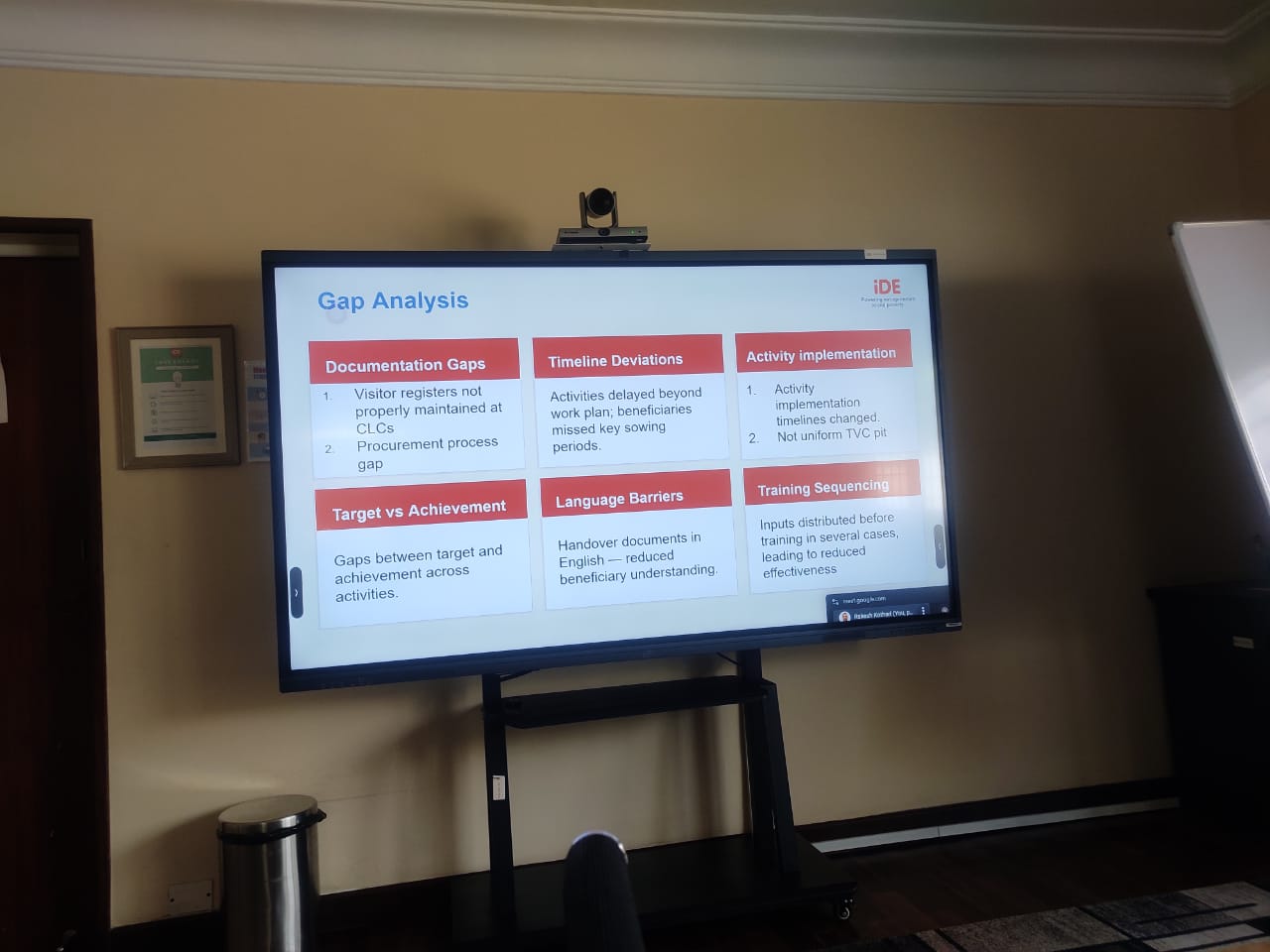
iDE Nepal ensures data integrity through rigorous process monitoring, bridging the gap between reporting and field reality. Our evaluation in Dang, Nawalparasi, and Rupandehi confirms that activities like Haatbazaar strengthening are overachieving, driving local prosperity. Innovations like the mushroom circular economy highlight unique field-level successes. To address identified gaps, we are mandating strategic corrections: all documentation must be in Nepali, and training must precede input distribution. This rigorous approach maintains stakeholder trust and empowers local entrepreneurs in the age of AI.
iDE Nepal will implement strategic corrections to ensure data integrity and bridge reported data with field reality. Key mandates include maintaining updated visitor registers at all community learning centers (CLC) and ensuring training is completed before input distribution. To improve understanding, all handover documents will be prepared in the Nepali language. Operationally, procurement documents must follow strict chronological order, and any changes to project timelines or targets require prior approval from iDE. IPM tools will be tailored to specific crop requirements, and sites for Tricho-Vermi Compost and CLC establishment must be secure and accessible. These actions reinforce the project's foundation of trustworthy evidence.
galería de imágenes